On November 3, I followed the American election returns from Stockholm where I was attending the Nordic Philanthropy Forum. As the results came in overnight, I got very little sleep. The next morning, celebratory smiles and champagne were shared at breakfast with Ronda Carnegie, Project Dandelion co-founder and other Forum attendees who seemed as relieved as we were by the restoration of the power balance in the US democracy. Four days later, Ronda and I were in Istanbul for a “Women of the Earth” gathering to prepare for COP31, and once again, we were greeted with happy smiles and celebratory toasts—not for us but for the United States.
Among the many insights and thoughtful analyses of what this overwhelming win for the Democrats meant, most political observers characterized it as a protest vote against the impacts of the Trump administration’s policies and actions, domestically and internationally; Trump was not on the ballot, an observation he used as a rationale for his party’s defeats, and of course, he still has two more years, so the question the political pundits are asking now is what will change with the new Congress and the many new governors and state legislators—whether the newly elected into power will use it for more than a ‘protest against’? Will the new leaders also bring some much needed moral imagination, and along with cleaning up the mess, will also do what is necessary to move urgently towards the policies and actions needed to secure a healthier, safer and more peaceful future.
I am more optimistic about this potential, in part because of how the re-balance of power that this election provided was also a new gender balance among elected leaders. More women will be shaping that future at every level of government than at any time in recent history, although it must be remembered that in 1992, headline writers declared a “Year of the Woman” after four women won Senate seats in a single election, a first. Maryland’s Senator Barbara Mikulski rejected the label at the time, insisting women were "not a fad, a fancy, or a year."
The 2026 midterms echo that moment, with a record 100-plus Democratic women headed to the House and a record 17 states elected women governors. Yet the overall number of women in Congress is projected to dip, because Republican women's numbers fell. The lesson of 1992 is that a surge is a beginning, not a guarantee. Whether these women use their positions to advance feminist priorities, rather than simply to be counted, will decide if 2026 becomes a turning point or another headline.
Among the new women leaders I am counting on to make this election the turning point is former Mayor of Atlanta, Keisha Lance Bottoms who defeated a billionaire willing to spend 200 million dollars to win. But he lost and Keisha Lance Bottoms became the first Black woman elected governor in American history, and Georgia’s first woman governor. All 83 governors before her were white men. She told her supporters, “Georgia is not defined by one moment in time or by one person. It’s been defined by all of us.”
Finally, “all of us” includes women and women of color—the photo of the new Governor, the new Secretary of State and Attorney General and other key positions makes it clear that Georgia is a very different state than the one I was born into.
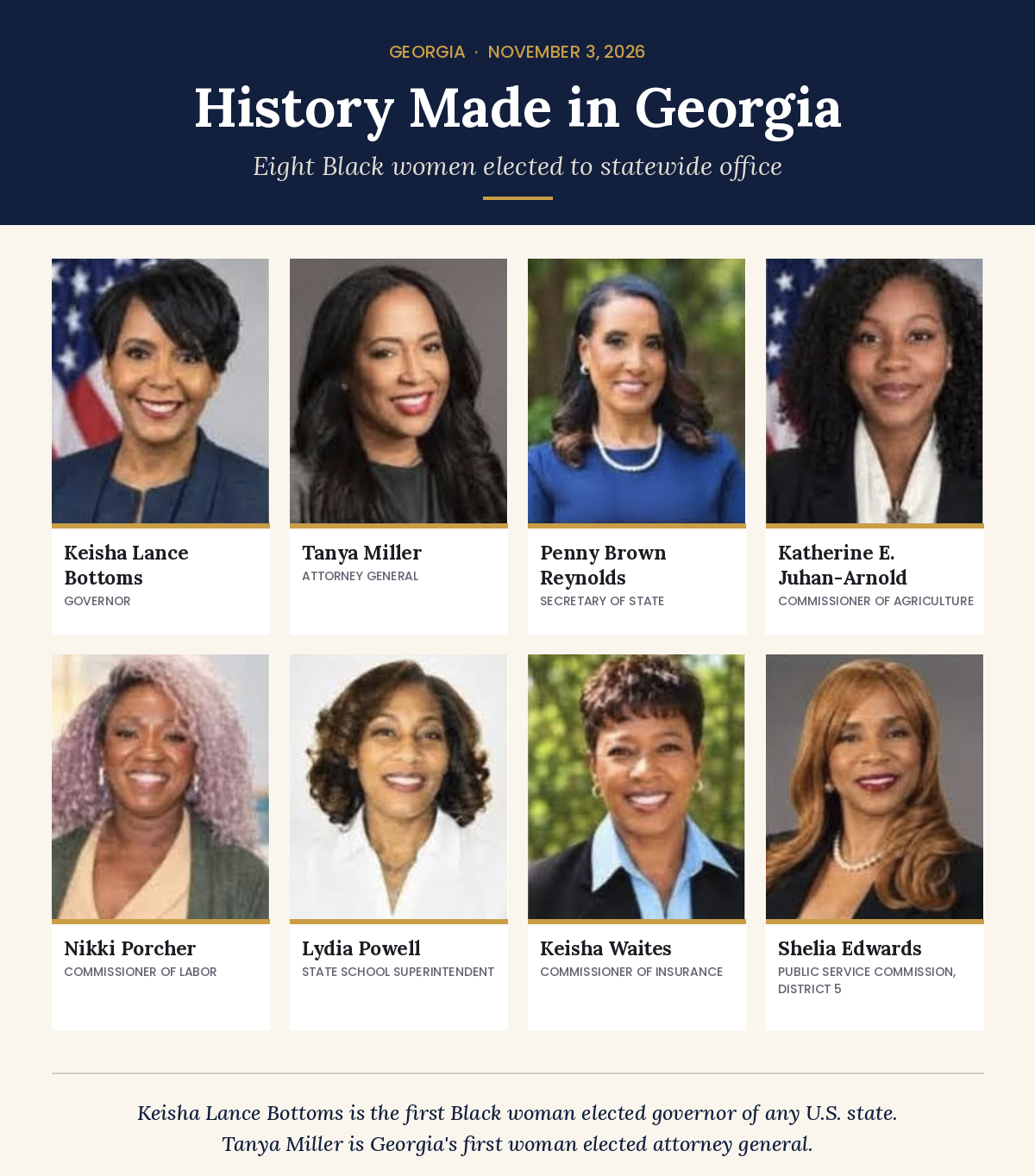
History was also made in New Mexico where Deb Haaland, a citizen of Laguna Pueblo, will be the first Native American woman to serve as a governor, and in Minnesota, Peggy Flanagan, a citizen of the White Earth Band of Ojibwe, will be the first Native American woman in the U.S. Senate. Gina Hinojosa will be the first Latina governor of Texas, and Amy Acton will be Ohio’s first woman elected governor. Juliana Stratton’s win in Illinois means three Black women will serve in the U.S. Senate at the same time.
Every one of these women stood on someone’s shoulders, and each of them acknowledged what the new governor elect Bottoms said in her victory speech: “I know I am standing on shoulders made of steel.”
This is what makes this ‘year of the woman’ different: it’s a movement rather than a moment.
In 2018, as Atlanta’s then mayor, Bottoms stood in the pulpit at Ebenezer Baptist Church and endorsed Stacey Abrams for governor. Abrams didn’t win but eight years later, Abrams supported Bottoms to win the race that Abrams came so close to winning. Also in 2018, Deb Haaland and Sharice Davids walked into Congress together as the first two Native American women ever elected there, and now Haaland makes history again with a fully activated community behind her.
So many more stories behind each of the victories show that all the women who bravely stepped forward to serve their country do so on the shoulders of the women who opened the doors to power and opportunity before.
As I travel around the world with Project Dandelion, meeting women leaders, I am more and more convinced that what we are witnessing is a strengthening of a newly activated and connected global sisterhood and if this ‘sistering’ continues, we will be on a different and faster path forward to that healthier, safer, more moral and more just world.
I am fortunate to witness such forward movement around the world as Project Dandelion connects and convenes frontline women leaders who are shaping new paths forward, often still without the resources that such efforts need to succeed with the speed that is necessary–but not giving up. Standing on ‘shoulders of steel” and continuing to show up!
More than 100 Turkish women leaders from business, NGOs, universities, and civil society showed up on a Saturday last week, at the pre-COP gathering in Istanbul the Women of the Earth forum. My friend and dandelion sister, Gülseren Onanç in her opening statement, reminded us that the people keeping watch over Turkey’s olive groves, forests and rivers are very often women, and their voices rarely reach the rooms where decisions are made, but in this forum, we made decisions and recommendations that will go the policy makers in Antalya this week at COP31.
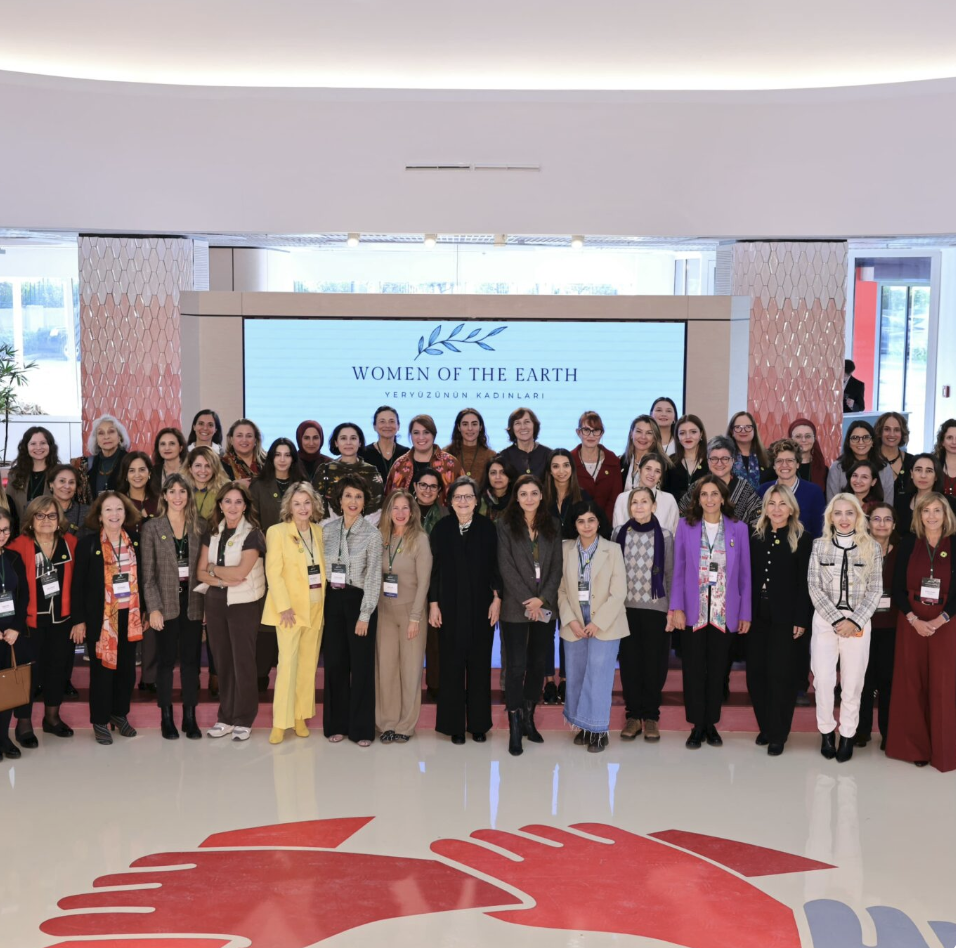
Organizers, Curators and Sponsors: Gülseren Onanç, SES Equality and Solidarity Association, Armaş Foundation, project Dandelion and Akbank
Project Dandelion’s founder Mary Robinson joined us in Istanbul by video to remind us of the work that united us. And today, as you read this, Mary is leading critical work at COP31, she is prioritizing the gender action agenda, heeding the science, and in negotiations for climate justice.
Iceland’s president, Halla Tómasdóttir, also sent a welcoming video to Women of Earth forum to inspire the Turkish women leaders present with a reminder that Iceland’s women came together and changed the course of that country’s (and others) history by making the work of women more visible and valued and by demanding equal access to the opportunities to lead. President Tomasdottir stood on her sisters “strong shoulders” and called upon us at the gathering to show up for one another wherever we may live or work and to imagine a future that we, as women, know how to shape. She also called on us and all leaders to have the courage to move towards a better future with urgency and with hope that we can do this. As she put it…“Hope is a verb with its sleeves rolled up.”
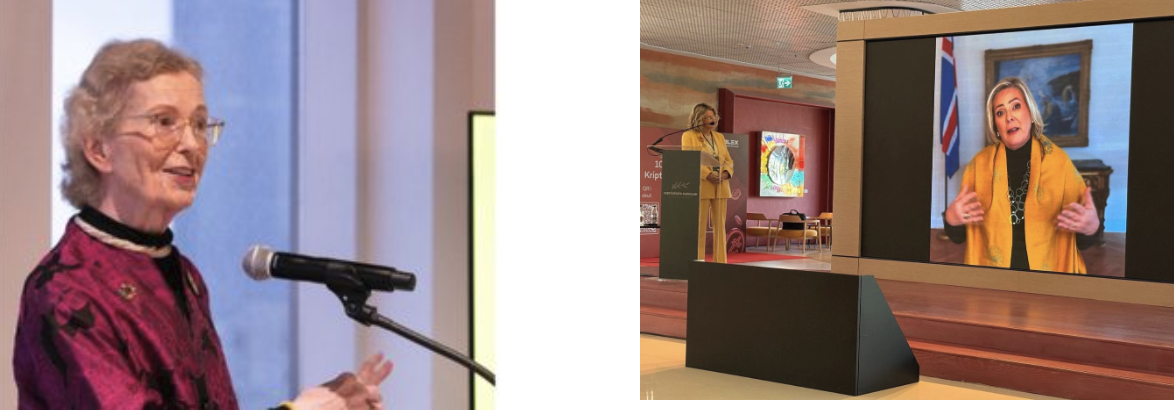
Left: Former President of Ireland and Project Dandelion Co-Founder Mary Robinson
Right: Iceland’s president, Halla Tómasdóttir and myself during the forum.
For me, the takeaway from all these forums is a reminder that we can’t consider one positive election result in the US or one inspiring gathering in Istanbul or a ground breaking forum on philanthropy in Stockholm, courageously led by Dandelions and courageous leaders, Cristina Ljungberg and Wendy Anderson, as proof enough that the movement forward doesn’t have enough momentum. We need more women philanthropists, stepping up to share their resources. We need more women leaders, collaborating, and partnering with each other for the power of collective action, and we need more women leaders everywhere and every level, stepping into their personal power and using their spheres of influence with courage and a commitment to service.
Remember that even with the midterms results, women still fill far fewer seats than men in Congress, in statehouses and at negotiating tables around the world, including at the critical negotiating tables in Antalya right now at COP31. Every gain I’ve written about here can be lost if we stop showing up.
This year, a Black woman, a woman of Hispanic heritage and an indigenous woman won the most powerful seats in their states. This year, more sisters will walk into Congress and I am counting on them to do act with the courage and urgency needed to get this country, the US, back on a pathway to being a more equitable, just, healthy and respectful member of the world’s communities of nations. My hope for them is they will step into their power with all their feminine virtues and feminist values.
This means for all of us, we need to keep having the hard conversations with your neighbors, including the ones who voted differently than you did. You won’t change every mind. You can find where you agree, and that is where trust starts.
Continue to build and foster community where you live. Sistering works on a street or in a school pickup line as well as it does in a room full of leaders.
Support women who run, and run yourself…And keep voting, in every election, including the small ones nobody talks about.
Then hold everyone in power to account, including the women we just elected. They’ve made promises. Keisha Lance Bottoms said she would be “a governor for all of Georgia.” Hinojosa told Texans, “we did not end one era of single-party rule just to usher in another.” They have asked to be held to it. Watch how officials vote and who pays for their campaigns. The Federal Election Commission publishes donors for every federal candidate at fec.gov, and each state publishes its own. Demand that the people we elect work for all of us, instead of for billionaires and the few.
As beloved Congressman John Lewis used to say, “We all live in the same house, the American house, the world house.”
Our US house feels more stable and balanced and hopefully, the leaders at the climate negotiations at COP31 this week will also take actions to make the world’s house more sustainable and just.
Onward!
Pat

