Dear Readers,
You may remember that back in September, I wrote a newsletter attempting to demystify the COP process, the annual gathering of global leaders charged with negotiating the commitments needed to secure a livable future. COP, of course, stands for Conference of the Parties to the UN Framework Convention on Climate Change. There have now been 29 of these convenings, and while many have been clouded by controversies, including the last two being hosted by oil and gas-dominated economies, progress has far too often fallen short of the promises. These gatherings remain the single most consequential decision-making arena for the future of Planet Earth. They are imperfect, frustrating, and sometimes maddeningly slow, but they are still humanity’s best chance at collective action on a global scale.
We are the first generation to fully understand the consequences of inaction, and the very last with the power to prevent the worst of what’s coming. Now, that may seem daunting to some, but it gives me hope knowing we have the knowledge and the means to solve the crisis. This realization, and my desire for my children and grandchildren to know I did everything I could, is what took me and a small but determined Project Dandelion team to the COP30 Amazonia, convened in Belem, Brazil.
Belém, a city perched at the edge of the world’s greatest rainforest — the “lungs of the planet” — hosted nearly 100,000 participants from every corner of the globe. Presidents, ministers, scientists, youth leaders, Indigenous guardians, mayors, business leaders, artists, and activists moved through the hot, humid corridors of the COP venues with a shared determination: to insist that the Amazon remain a living solution to the global nature and climate crisis rather than a monument to our collective failure to heed the science and implement the changes necessary to ensure a livable future on Planet Earth.
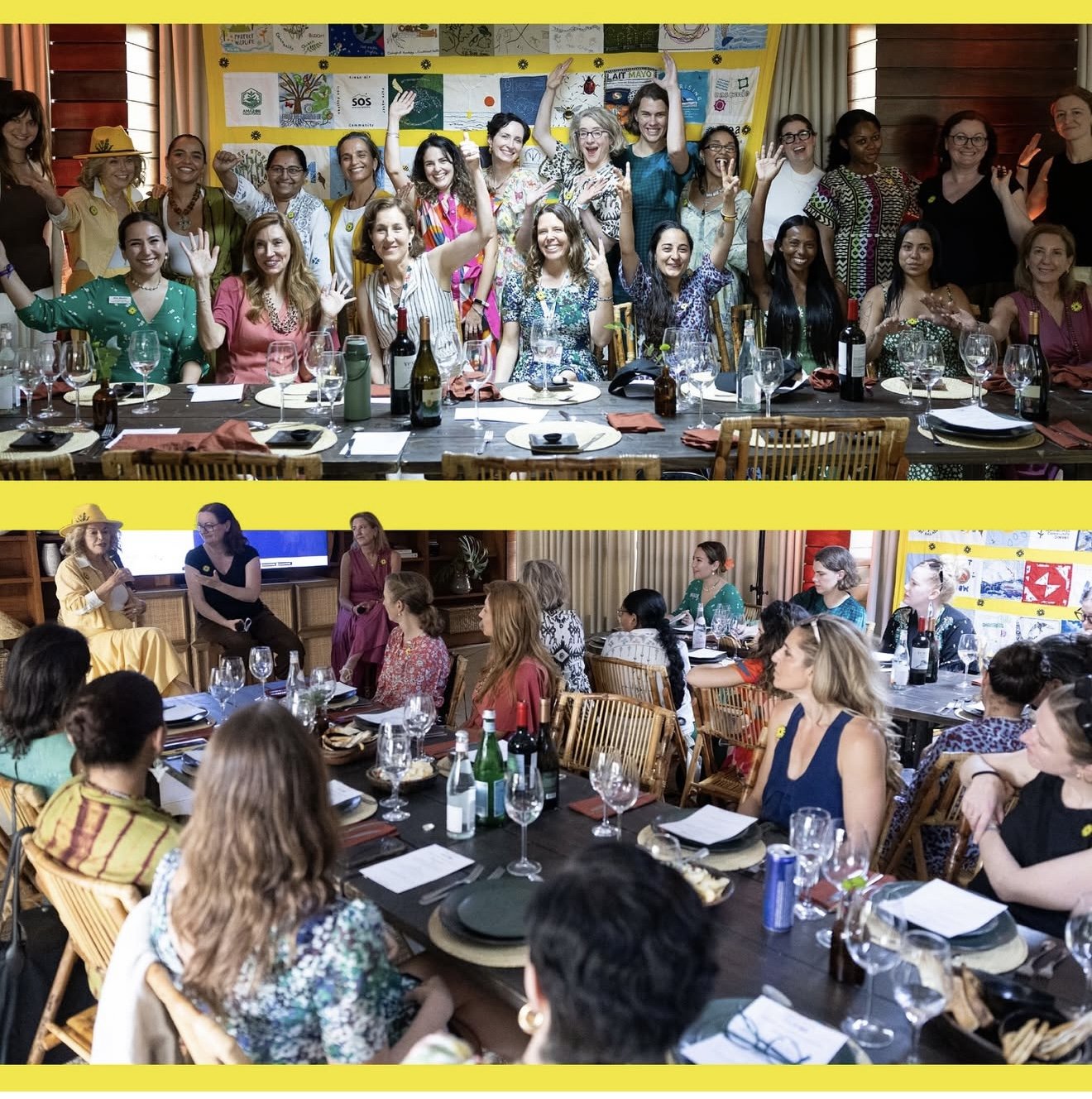
Project Dandelion was created to meet this moment with an urgent call for collective action. I left Belém carrying stories, stories of women leading with fierce determination, of Indigenous guardians speaking for the forest with unmatched clarity, of youth activists pulling us toward the future with urgency, and of global networks like Project Dandelion insisting that any solution worth having must be inclusive, intersectional, and rooted in justice.
Co-founders Ronda Carnegie and I, alongside our Senior Strategist Laura Cook, spent the first week convening Dandelions across Belém to encourage, together, the feminist leadership and moral courage this moment demands. From spiritual leaders to youth innovators, from scientists to business champions, we witnessed just how many people are ready to lead with imagination, solidarity, and moral clarity. These voices grounded this COP in values and ethics, shaping not just the atmosphere in Belém but the policy center of gravity.
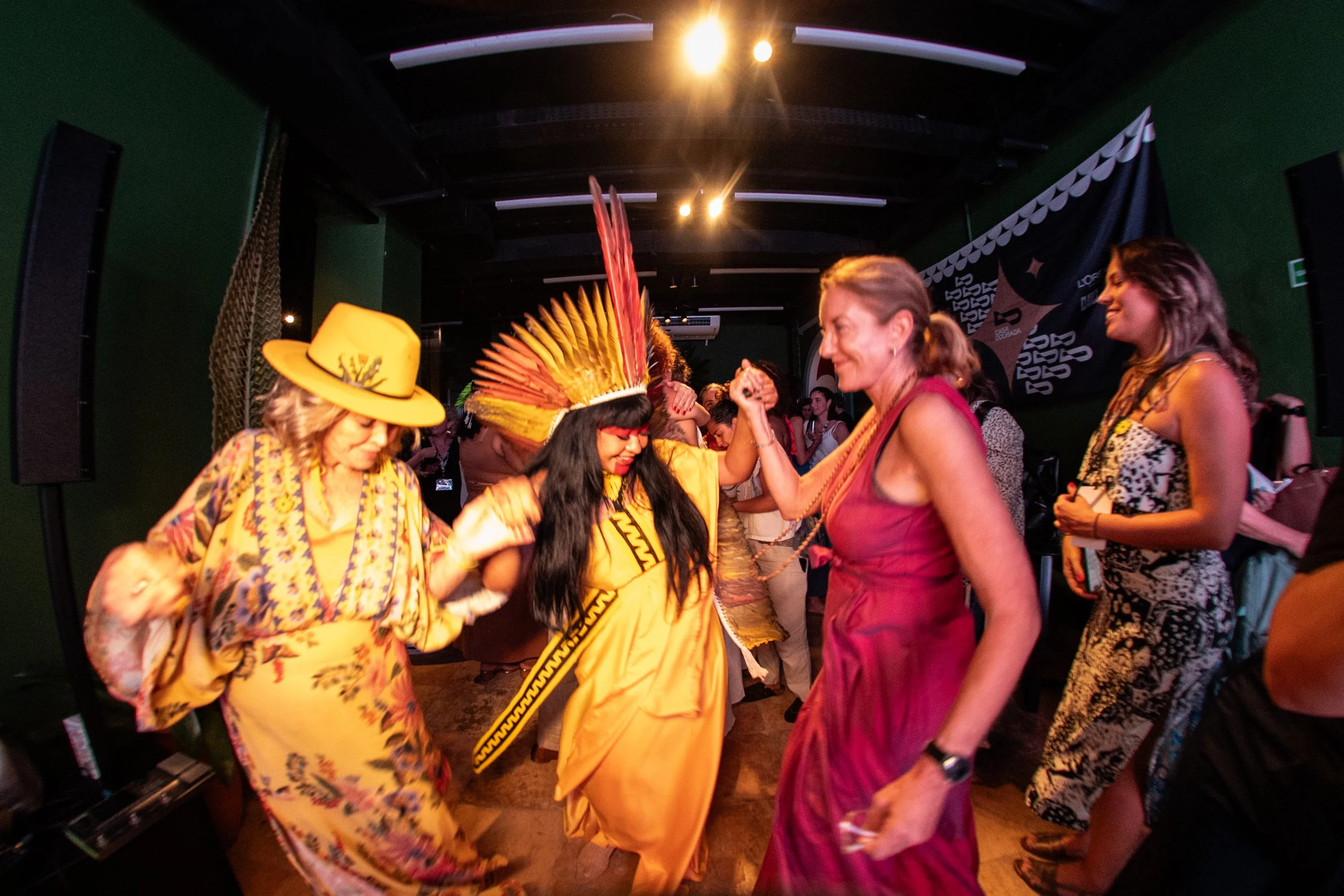
We gathered for the Women at the Forefront of Climate Action dinner held at the historic Casa Dourada Belém’s Cidade Velha. The event was co-hosted by Project Dandelion, Instituto Clarice, and the L’Oréal Foundation together with extraordinary women shaping a more just and livable world. Our partners for this event, Mariana Ribeiro and Flavia Doria, Brazil’s feminist leaders, COP official hosts and organizers as well as Project Dandelion’s strategy and narrative lead, Laura Cook led a celebration of leadership, resilience, and the unbreakable spirit of women connected by a vision of what the future could be and calling for ways to move towards it.
That evening, Dandelions Marcella Fernandez and Durja Julia also performed a profoundly moving ritual on the power of water for life and reminding us that this circle of women leaders reflects the solidarity that is our power. We are walking this path together and we have every reason to keep believing in what we can achieve.
After a powerful provocation, Brazil’s first Indigenous leader elected to the country’s Parliament, Celia Xakriaba, reached for mine and Ronda Carnegie, Project Dandelion’s cofounder and Executive Director’s hands, and she pulled us into a dance of joy and united spirits.
The next evening at the TED Countdown House in Belém, Project Dandelion gathered more women leaders, innovators, and allies who are reshaping what climate adaptation can look like when imagination meets implementation. The room carried a sense of purpose and possibility. We shared our social media campaign on small holder farmers in Ethiopia, India, and across our global network, as evidence that women are not merely responding to climate change — they are redefining resilience itself.
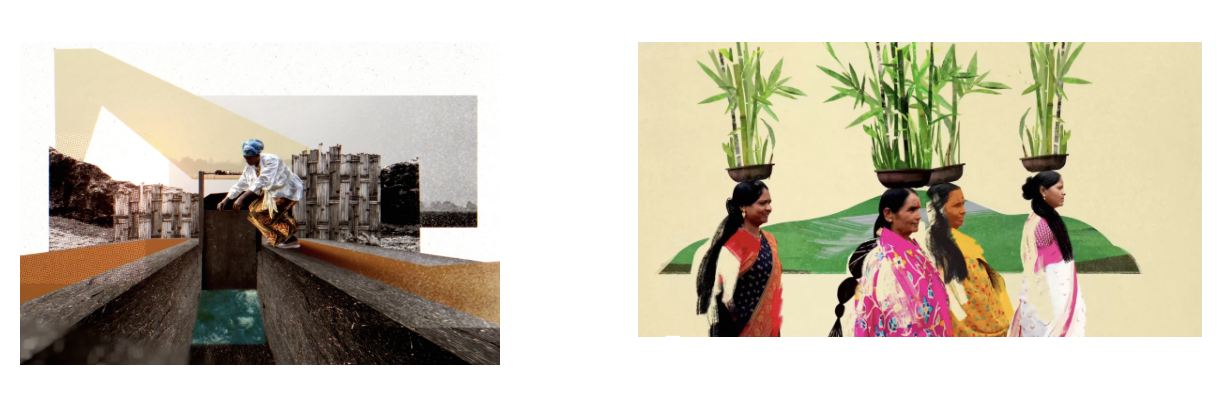
Through the provocations that unfolded over dinner from Ana María Loboguerrero’s call to recognize women smallholder farmers as architects of innovation, to Sage Lenier’s vision for mobilizing institutional capital, to Estelle Willie’s reframing of adaptation as a new form of development, and Ana Lucia Villela’s reminder that children’s voices must guide us — the evening became a testament to the power of collective leadership.
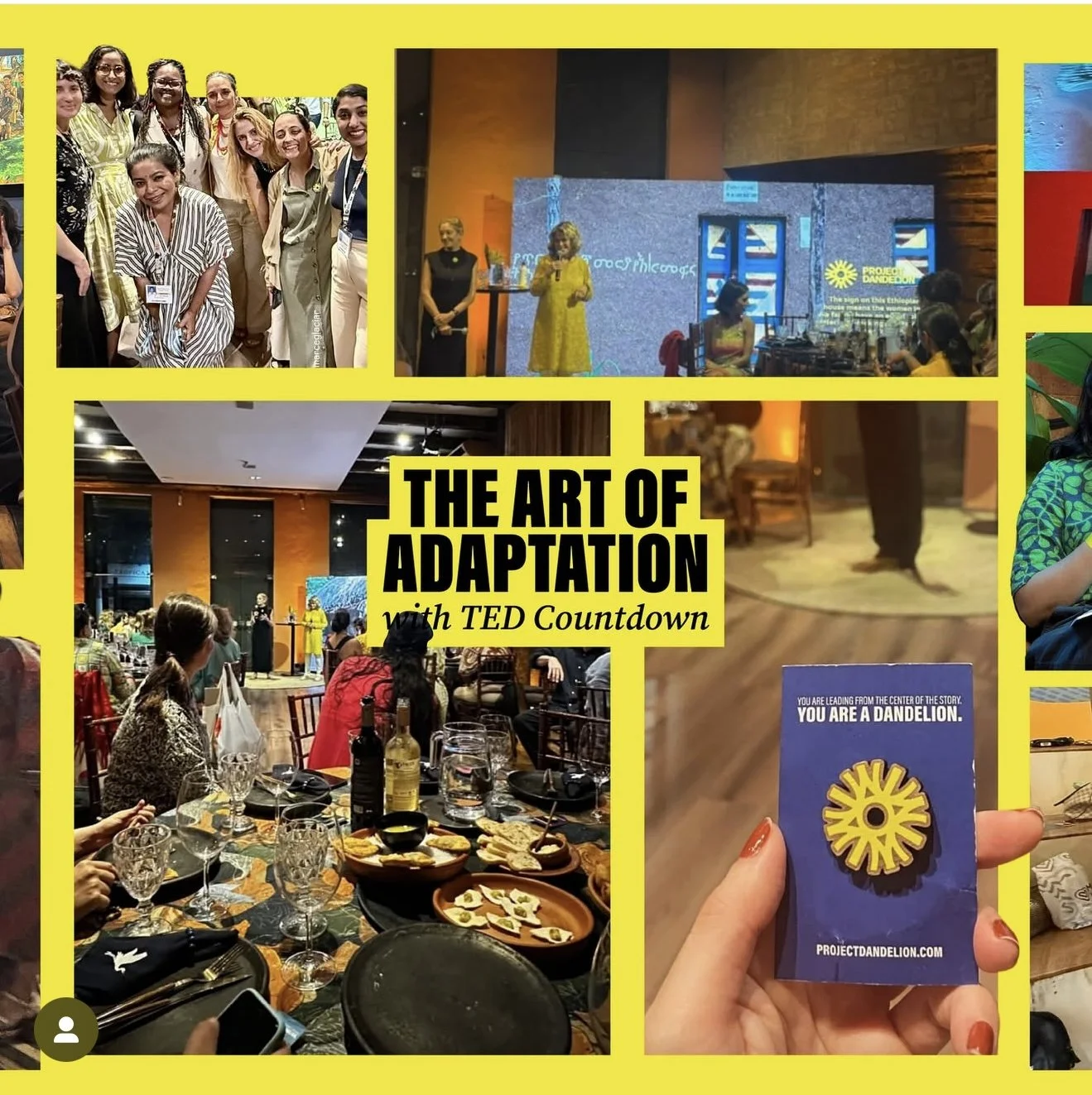
Laura Cook, with her characteristic grace and articulate messages, drew insights from all of the conversations to remind us why we gather as Dandelions: to connect, to unify our work, and to imagine what’s possible when we act together. Standing with Ronda at the close of the evening, I felt once again the deep truth at the heart of this work– that the Dandelion grows wherever it’s planted and even grows up through the cracks….wherever there is light, and that light, for me, shines brightest when women lead, together.
Always at the forefront in these global convenings was Project Dandelion’s co-founder and courageous world leader, Mary Robinson, who once again, as she has done at nearly every COP, made a compelling case for the interconnectedness of gender justice and climate justice
At this writing, the final language in the Gender Action platform as well as all of the global agreements and commitments has not been released, but I did just receive an update from Project Dandelion’s ever resilient Laura Cook, still on the ground in Belem.
Laura reports that today, “In an emotional, packed-out Press Conference Room 1, Colombia — in partnership with The Netherlands — convened a coalition of countries calling for real momentum behind the transition away from fossil fuels, declaring..There is still time to deliver a success story from Belém. We cannot leave COP30 without an explicit intention and a credible roadmap to phase out fossil fuels.*
The success will be unambiguous language acknowledging that fossil fuels are at the root of this crisis — and a call, however overdue, to not only phase out the reliance on fossil fuels that are responsible for the deaths of more than one million people a year, but to shift urgently to cheaper, cleaner and renewable energy sources; to set clear deadlines for the necessary end of fossil fuel exploration and use; to acknowledge without qualification that oil, gas and coal remain the biggest drivers of climate change and one of the greatest threats to the health of all, in particular, children’s health.
Consider this: One billion babies have been born since the Paris agreement when most of the world’s nations agreed to do what was necessary to keep the world’s temperature at 1.5 c or below. For them, and all generations now and to be born, we must be the generation that acts now to reverse the damage and protect what we love–and need- to survive and thrive.
Back home from Belem, waiting as we all are, for the final negotiated agreements on global actions to address the crisis that touches us all, I am feeling hopeful. Not naive optimism, but the grounded hope that comes from standing in rooms where people are still willing to fight for one another. Where courage is contagious, and witnessing the changes when women lead, together, when indigenous voices are centered, when youth demand accountability, when movements link arms across borders — something powerful shifts. And that shift, I believe, starts with a commitment within each of us to answer the call to action.
I want to close with this excerpt from Amanda Anastasi’s poem ‘The Last Call’. It is currently displayed in the Oceania Pavilion at COP30, and has been presented to the UN as part of the Oceania Global Ethical Stocktake.
Let it not be said that we could not find the will
to do the work of reforesting, of decarbonising,
of transitioning to the sun and wind and wave.
Let it not be said that we were not ambitious
for humanity; for our child’s air, water and soil
and the spaces they will think and create in.
On the morning after the cruellest bushfire,
listen to how the currawong and crow circle
above the scorched ground, beginning a call
for life to return. Note the persistent budding
from black; the green pushing through despite us.
Let it not be said that our inertia was too strong
to keep home habitable. Let it be said we chose
courage. We chose unity. We chose survival.
Onward!
- Pat

