Dear friends,
This past weekend, yet again, gun violence shattered lives. In Rhode Island, in Australia, and in the quiet remembering of the Sandy Hook anniversary.
These acts of horrific violence arrive at a moment meant for light and celebration. As families gather for Christmas and Hanukkah, candles are lit for hope, peace, faith and community. Instead, grief and loss return, relentless and in many ways, shaping a level of fear and insecurity for everyone.
The tragic irony revealed in one report that one of the students affected at Brown University also survived the Parkland high school shooting reminds us of the generational scars of growing up with this epidemic of violence. We are all traumatized and forever changed by such violence, no matter where or when they occur.
They certainly impact how we enter the times set aside for celebrations and connections. Holding both the sorrow and the responsibility to elevate concerns about violence anywhere and everywhere that I write today about the increasing rise of targeted violence against women here and around the world.
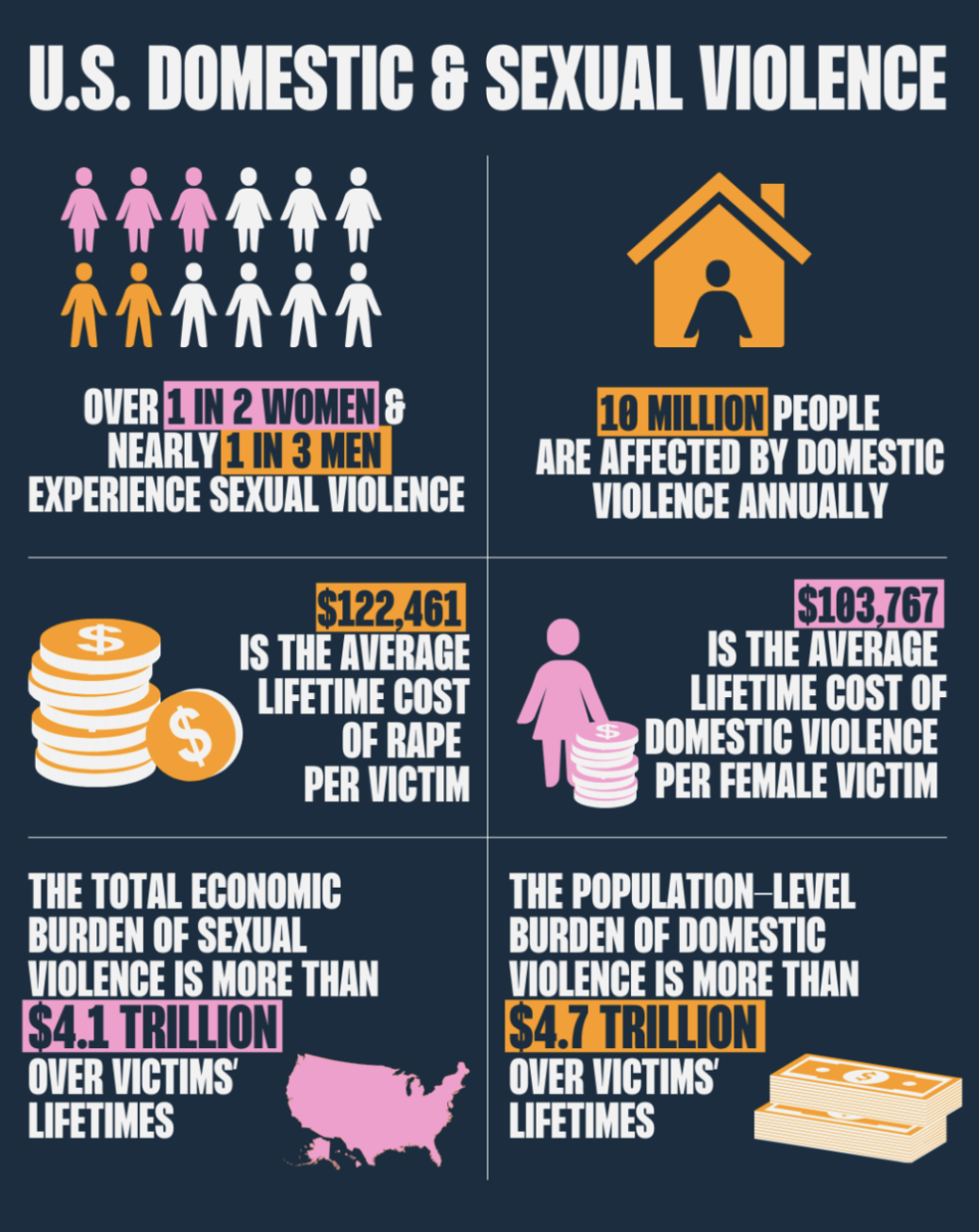
As we enter a season of gathering, generosity, and gratitude, I find myself holding a difficult truth. Alongside the joy: violence against women is rising—here at home and around the world. And during the holidays, when expectations are high and pressures intensify, women are vulnerable to this violence, too often becoming more volatile, and more deadly. It’s not an easy holiday subject, but it’s on my mind and in my heart always, and I hope you’ll continue reading.
For decades, advocates and service providers have warned us that the holidays are not a time of comfort for every woman. Financial strain, emotional pressures, and relationship stress—all amplified by an affordability crisis—create a dangerous environment for those already living close to the edge of harm. When families face impossible choices, when partners feel their own sense of control slipping, women disproportionately bear the consequences. Calls to hotlines rise. Emergency shelters fill. Safety becomes a privilege far too many cannot access.
This is not only an American story. It is global—and growing.
Around the world, so many women are fighting not just for equality, but for survival.
One of those places lives in my heart ever since I had the privilege of going there with V (formerly Eve Ensler) who founded the VDAY movement, was one of first to focus the world’s attention on what is often referred to as the most dangerous place in the world for women: the Democratic Republic of Congo. Working with the dedicated Congolese activist Christine Schuler-Deschryver, VDAY raised funds to build and help support a unique healing and transformational leadership center, City of Joy, for the thousands of women and girls raped and violated every year in Eastern Congo.
(The full story of this partnership and the impact of City of Joy as a model for addressing the global epidemic of violence against women and girls can be viewed in the film, City of Joy, available on Netflix. You can view the trailer below.)
The Democratic Republic of the Congo is one of the most resource-rich yet conflict-scarred places on earth, and women and girls continue to face staggering levels of sexual violence. Violence that is used deliberately as a weapon of war in the conflict over access to the country’s minerals…minerals that power our technology, our cars, our digital lives—while Congolese women pay an unthinkable price.
Watch the film and help us end the deadly silence from the global community that allows this situation to continue.
In every place where women are under attack—whether in their own homes or on the frontlines of conflict—we see a truth I have witnessed over and over again in my work: when women’s safety is threatened, the stability of whole communities collapses with it. Violence against women is not “a women’s issue.” It is a peace issue, a democracy issue, a justice issue, and a global security issue.
For my friend, Dr. Edit Schlaffer, founder of Women Without Borders, the increase in violence against women and girls is interconnected to the breakdown of democracies as well as basic personal and community security and safety. Dr. Schalffer wrote about this recently in an OpEd originally published in ‘Die Presse” in German and with permission, I’m sharing the English translation.
“Doing Business with Misogynists
How we sacrifice our values for profit and normalise violence against women worldwide
Edit Schlaffer & Rafael Kropiunigg
The global war on women is becoming visible once more. South Africa has just declared a state of emergency in response to escalating gender-based violence, following nationwide protests across urban centres organised by the NGO Women for Change. In France, the government has unveiled a comprehensive bill against violence targeting women and children, developed jointly with feminist organisations. The catalyst was a sharp rise in sexual violence and femicide, particularly within the home. The United Kingdom’s Foreign Secretary, Yvette Cooper, views the issue as a universal global challenge and is “determined that we must renew that global focus and ambition around women, peace and security and put it at the heart of UK foreign policy.”
These protests and political initiatives constitute a response to a global misogynistic wave—or indeed tsunami. A new UN Women report shows that in 2024 approximately 83,300 women and girls were deliberately killed worldwide. Around 60 percent of the victims were murdered by an intimate partner or family member. Women and girls are least safe in their own homes.
Violence is further reinforced “from above.” An estimated 71 per cent of the world’s population now lives under patriarchal-authoritarian or semi-authoritarian regimes––and this trend is on the rise. Women are increasingly targeted, particularly in states where “strongmen” shape the everyday realities of women and girls. Much like the discourse around climate change, structural and physical violence against women is increasingly questioned or treated as a luxury that can no longer be afforded.
Even progressive governments that demonstrate and translate solidarity into action silently recast women’s rights as a negotiable commodity when political or economic pressure demands it. As it goes: democracies proclaim their values, companies publish ethics statements––and simultaneously they conduct business with governments and tech giants that systematically devalue women or normalise violence against them. Even alleged rapists who, as democratic officeholders, openly propagate misogyny are accommodated with wilful blindness. Many companies practise anticipatory obedience and gradually abandon their support for DEI.
Commitment to human rights ends where oil, power, or algorithmic reach begins. Saudi Arabia is a striking example of this paradoxical dynamic. For decades, the state restricted women’s freedom of movement and participation in public life; today it is a strategic partner for energy supplies, arms exports, sporting events, and digital mega-projects. Within the country, gender-based violence remains largely unpunished, and reforms are driven more by geopolitical calculations than by goals of equality. The West’s muted response is also an unequivocal message: women’s rights matter, but trade and defence contracts take precedence.
A similarly contradictory pattern can be seen in relations with Putin’s Russia. In 2017, domestic violence was largely decriminalised. For a first offence, a blow causing a broken bone or concussion is considered a mere administrative violation. NGOs are branded “foreign agents,” and state rhetoric denounces any form of gender policy as a threat to the nation. Nevertheless, Europe’s energy trade with Russia was so extensive for decades that even after the annexation of Crimea scarcely any moral consequences followed. Democracies condemned political violence while largely overlooking the trivialisation of private violence against women.
In Western democracies, tolerance of misogynistic power structures remains astonishingly high. Donald Trump was found liable for sexual abuse in a civil case. Numerous women have accused him of harassment or assault. And yet business continues as usual––from corporate donations to unrestrained social media amplification that guarantees reach. When polarisation generates profit, moral considerations become secondary.
Misogyny produces oppression, domination, and diminishes the rights of women and girls. This hostility towards the female sex is a core ingredient of extremist ideologies, which have gained significant momentum in recent years through accelerated digitalisation. In many extremist movements, misogynistic messages function both as an entry point and as connective tissue strengthening anti-democratic worldviews. The tech sector illustrates this dynamic vividly, and the rapid transfer of online misogyny into offline daily life is particularly alarming. The so-called tech bros knew this early on, but profit reigns supreme. Many of them continue hyper-charging algorithms while often keeping their own young children away from screens.
The real paradox is this: violence against women is met with rhetorical expressions of solidarity while the very systems and platforms that enable and amplify such violence enjoy broad resonance. Words are value-driven, but actions are primarily driven by self-interest. If resistance to patriarchal power and violence is genuinely a societal consensus, symbolic outrage and campaigns such as the 16 Days of Activism Against Gender-Based Violence are insufficient.
Fundamental questions are at stake. What kind of society do we want to live in, and what compromises are we willing to make? With whom do we do business, and what do we legitimise as a result? For as long as misogyny is tolerated and practised––whether in a desert kingdom, the White House, or Silicon Valley––violence against women will continue to escalate. The normalisation of violence against women at every level is a warning sign of the disintegration of our fragile democratic architecture. Dare we say it is often the first warning sign of democratic decay and bourgeoning misogynist authoritarianism.
If we are truly to take the global rise in violence against women seriously, we must finally recognise that misogyny is not merely a social problem but a political, economic, and digital instrument of power. It links authoritarian regimes, opportunistic democrats, and “tech-aucrats” that profit from hatred and division. As long as democracies collaborate unreservedly with misogynistic rulers, as long as companies court these powerholders who openly devalue women, and as long as algorithms reward those who demean women, every expression of solidarity remains moral posturing. The price of this complicity is steep: we normalise violence, weaken equality, and erode the democratic structures that protect us. The question is therefore not whether we condemn misogyny (we long do) but whether we are prepared to act on that condemnation. A world that does business with misogynists inevitably produces more violence. A world that stands up for and behind women lays the foundations for global security and justice.
Dr Rafael Kropiunigg holds a PhD in History from Cambridge University and is Research Director at Women without Borders, a quasi-international organisation based in Vienna, Austria (https://wwb.org). He has been responsible for WwB’s research projects, including ‘Can Fathers Challenge Extremism? Studying the Prevention Potential of East African Fathers’, which informed WwB’s ongoing FatherSchools programme.
Dr Edit Schlaffer is a social scientist who founded Women without Borders in 2001 to strengthen and harness the social capital of women in the global fight against gender-based violence and violent extremism. Under her leadership, WwB launched the world’s first women-led counter-extremism network Sisters Against Violent Extremism (SAVE) and the globally recognised ‘MotherSchools: Parenting for Peace’ model.”
I know this is hard to read about or think about, but its a reality that we cannot, as caring human beings, ignore.
I want to share some encouraging news about the global epidemic: South Africa and Italy are paying attention to the steep rise in numbers of women violated, and taking steps to protect them. The BBC reported last month that South Africa has declared gender- based violence a natural disaster and this designation opens funding and urgent care for those that need it. This followed the brave actions of hundreds of women who conducted 15 minute lay down protests. South Africa experiences some of the world’s highest gender-based violence, with the rate at which women are killed is five times higher that the global average, according to UN Women.
Also as of last month, Italy now recognizes the crime of femicide and punishes it with life in prison.
These are important governmental responses, even though limited impact.
Mostly the solutions to violence against women begin in the heart and in the home when we begin to notice, to care, and to act. Its not acceptable for a civilized people to condone and ignore this, even when it is hard to know how to respond.
In this season of lights, I hold fast to what I have learned across decades and continents: darkness is never the end of the story. Wherever women have been most harmed, I have also seen women rise; they are organizing, healing, protecting one another, and demanding a future that looks different from the past. The light we need does not come only from candles or celebrations, but it comes from courage, from solidarity, and from the daily choice to refuse indifference.
Each of us carries a piece of that light. When we speak out instead of looking away. When we support those doing the hard, unglamorous work of safety, justice, and care. When we insist at our own kitchen tables and in halls of power—that violence against women is neither inevitable nor acceptable. These acts may feel small, but together they become something powerful: a force that disrupts silence and makes change possible.
As we move into the new year, my hope is not naïve, but rooted in women who have survived and are leading, in movements that are growing, and in the unshakeable truth that protecting women protects us all. May this season remind us that light is strongest when it is shared and especially now, we can be part of what brings safety, dignity, and peace into the world.
Onward!
Pat

