If you've been paying attention to the news, you know that the global conference on climate negotiations–COP31–ended without an agreement among the nearly 200 countries represented on how to end a climate and nature crisis that threatens to end habitable life on Planet Earth. Yes, it's that important–and yet, world leaders allowed the self interest and greed of a few fossil fuel companies and countries, responsible in large part for the environmental damage impacting all countries, to dominate the negotiations.
This is not good news. But rather than writing more about the failure of the process to get global agreements on carbon emissions or additional commitments to finance adaptation or accountable steps to limit how far the world overshoots the 1.5°C (to stay alive) limit on rising temperatures, I invite us to consider what is foundational to all that we're trying to protect, restore, and transform–land!
Land is not simply the ground beneath our feet. It is the foundation of life. It sustains our food systems, regulates our water cycles, stores carbon, supports biodiversity, and provides the ecosystems upon which all human communities depend.
And yet, our relationship with land has become profoundly disconnected.
I have been thinking about my relationship with land in a very personal way lately. I spent my first few years with my grandparents on a small tenant farm in South Georgia, where the land was our livelihood. It shaped the rhythms of daily life and work, defined the seasons, provided the food, and livelihood for the family. As a child, I don't think I fully appreciated how deeply that experience was becoming embedded in my heart and soul and like many young people, I longed to leave the farm for town–and did.
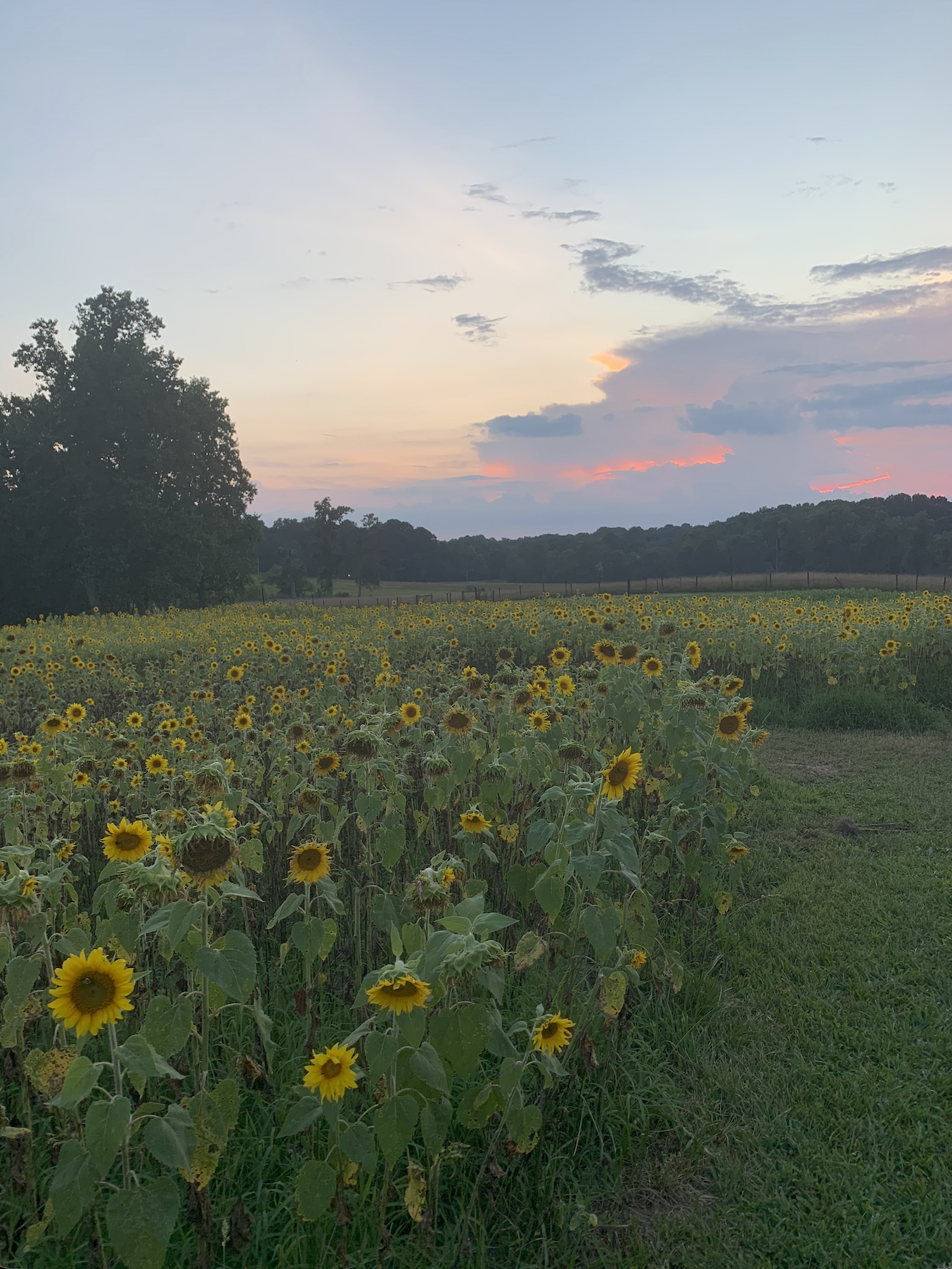
South Georgia farmland
Later, I discovered that my grandmother was a descendant of the Muskogee Creek Nation, one of the indigenous communities that had lived peacefully and abundantly for thousands of years on land they shared, land that once extended across what we now call Georgia, Alabama, Florida, South Carolina and other parts of the American South. With the arrival of the European colonialists came the concept of owning the land, and in a land grab of tragic proportions, they forcibly removed the Indigenous communities from their homes and marched them thousands of miles to the territory that became Oklahoma. Some walked barefoot through the cold and snow with only the few possessions they could carry on their backs. This so called ‘removal’ or ‘resettlement’ was, in fact, a genocide as thousands died during this forced dispossession of the land, displacement of families and culture, and the consequences of that history, known now as The Trail of Tears, are still with us.
I find myself wondering whether some of what we are experiencing today, in the destruction of ecosystems and the loss of biodiversity, reflects a much deeper problem: our failure to understand what the first inhabitants of the land now named the United States knew in principle and lived in practice–that we are part of the land, not separate from it, and that our relationship with the land must be framed through the responsibilities of stewardship and reciprocity.
For me, this is one of the most important lessons we can recover and restore as we approach a celebration called Thanksgiving in the US. We have an opportunity to reflect on the meaning of giving thanks and further reflect on our relationship with the land and to acknowledge the Indigenous peoples whose histories, cultures, and relationship with land are often absent from the familiar story of the holiday.
The history of Thanksgiving is considerably more complex than the popular narrative suggests. The Wampanoag people, whose homeland includes the place where the 1621 gathering later named a 'thanksgiving' took place, had their own longstanding traditions of harvest and giving thanks, as did many other Indigenous nations. The celebration did not arrive with the newcomers who were invited to share the harvest they likely did not even cultivate.
For many years, I found it challenging to celebrate Thanksgiving, given the tragic consequences of the dispossession that came with colonization, but recently, I'm viewing this holiday as an opportunity to think beyond gratitude as a sentiment and consider it as a responsibility.
The botanist Robin Wall Kimmerer, a member of the Potawatomi Nation, writes about this in her book Braiding Sweetgrass. She teaches that when the land gives us something, we owe something back. In another of her books–my favorite to read and re-read– The Serviceberry, Abundance and Reciprocity in the Natural world, Kimmerer reminds us that we have created systems of extraction, exploitation, and ownership that actively harm what we love and need, and in a more reciprocal relationship with the land and the natural world, wealth is measured by the quality of our relationships and not the illusion of self sufficiency. We are of the land and land is life itself.
To live with a deeper sense of reciprocity with the land is to be grateful every day for the food on our tables, the water we drink, the air we breathe, and the natural systems that sustain us. And what would it mean to translate that gratitude into actions that protect land, restore ecosystems, support Indigenous land rights, invest in regenerative approaches to agriculture? All these actions would ensure that future generations inherit a world capable of sustaining life!
The climate and nature crises are, at their heart, also crises of relationship: our relationship with nature, with one another, and with the land. We cannot build a climate-safe future while continuing to treat the natural world as something separate from ourselves…treating dirt like—well, "dirt"...instead of the most effective potential resource for ending the climate and nature crisis.
Land is the foundation upon which so many solutions depend, and we do not need to invent an entirely new way of relating to the land. There are communities and cultures around the world that have carried this understanding across generations.
Our task is to listen, to recognize their leadership, protect their rights, and create the conditions for their wisdom and experience to support healthy forests, grasslands, wetlands, peatlands, and agricultural soils, all essential to carbon storage, biodiversity, water cycles, and climate resilience. Indigenous communities have sustained those ecosystems for generations, and today, Indigenous People manage or hold rights to about a quarter of the Earth's land and an estimated 80 percent of the world’s biodiversity is found on land under Indigenous community stewardship.
This is reason to celebrate and be grateful for an Indigenous perspective on land as the foundation of identity, culture, food systems, community, and responsibility to future generations.
I witnessed this relationship to land earlier this year when I traveled with a Project Dandelion delegation to the Sierra Nevada de Santa Marta in Colombia to be in community with the Arhuaco people. At a retreat curated and led by four Indigenous women leaders from the communities of the Region– Arhuaco, Kogi, Wiwa, and the Kankuamo--one of the women leaders who led our retreat, Gunna Chaparro, described the land as "one more member of the community of life."
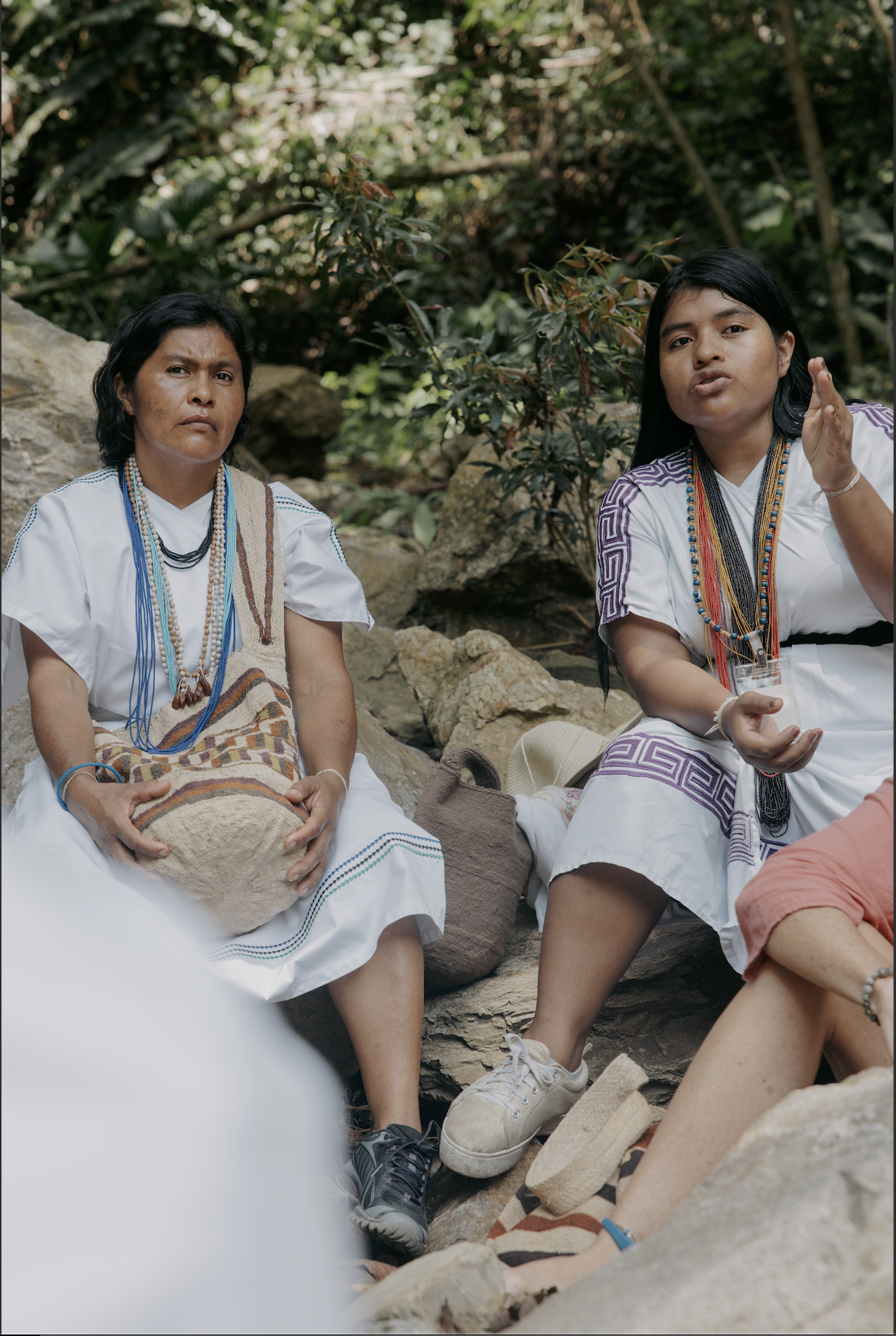
Left: Kundi Nabusimake Right: Gunna Chaparro photo credit: Leia Vita Marasovich // @leia_vita
You can see it in how they live. Their homes are made from the earth around them, so that when a house has finished sheltering a family, it returns to the soil and feeds the land that built it.
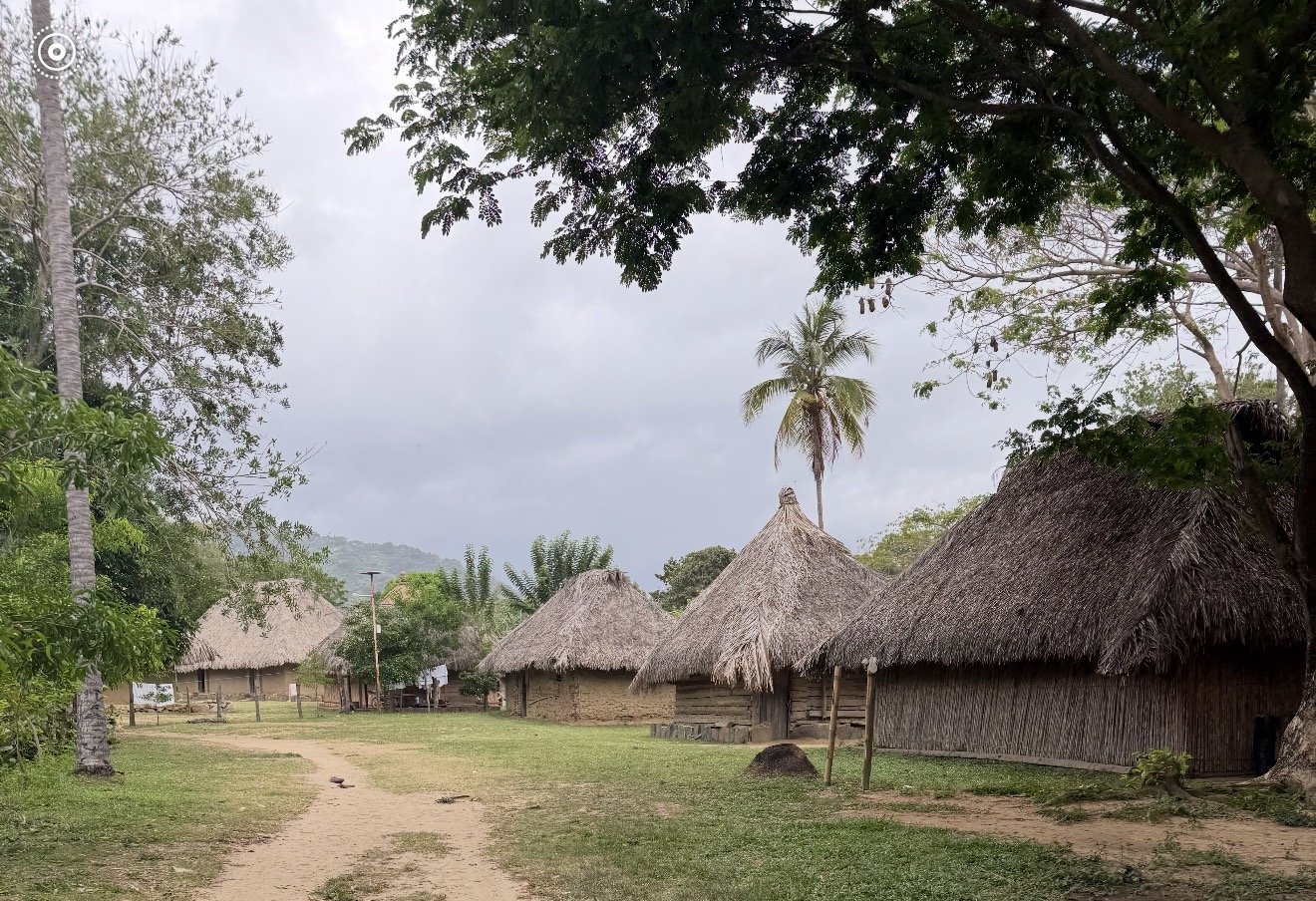
Homes in Katanzama in the foothills of the Sierra Nevada de Santa Marta
About 15 years ago, the Arhuaco bought back a piece of their ancestral land that had been worn down into a barren cow pasture. Today it is lush and thriving. Researchers comparing satellite images found that forest cover there grew by 63 percent in just 12 years. Project Dandelion and the women who traveled with us to Gitana Del Mar and to the Arhuaco community left understanding that restoring land and restoring a people's relationship to it are the same work.
That is why Project Dandelion connects the global climate movement with the leadership of women, Indigenous communities, and grassroots movements working toward climate justice. It is a reminder that climate solutions must be rooted in communities and in the protection of the places and land we call home.
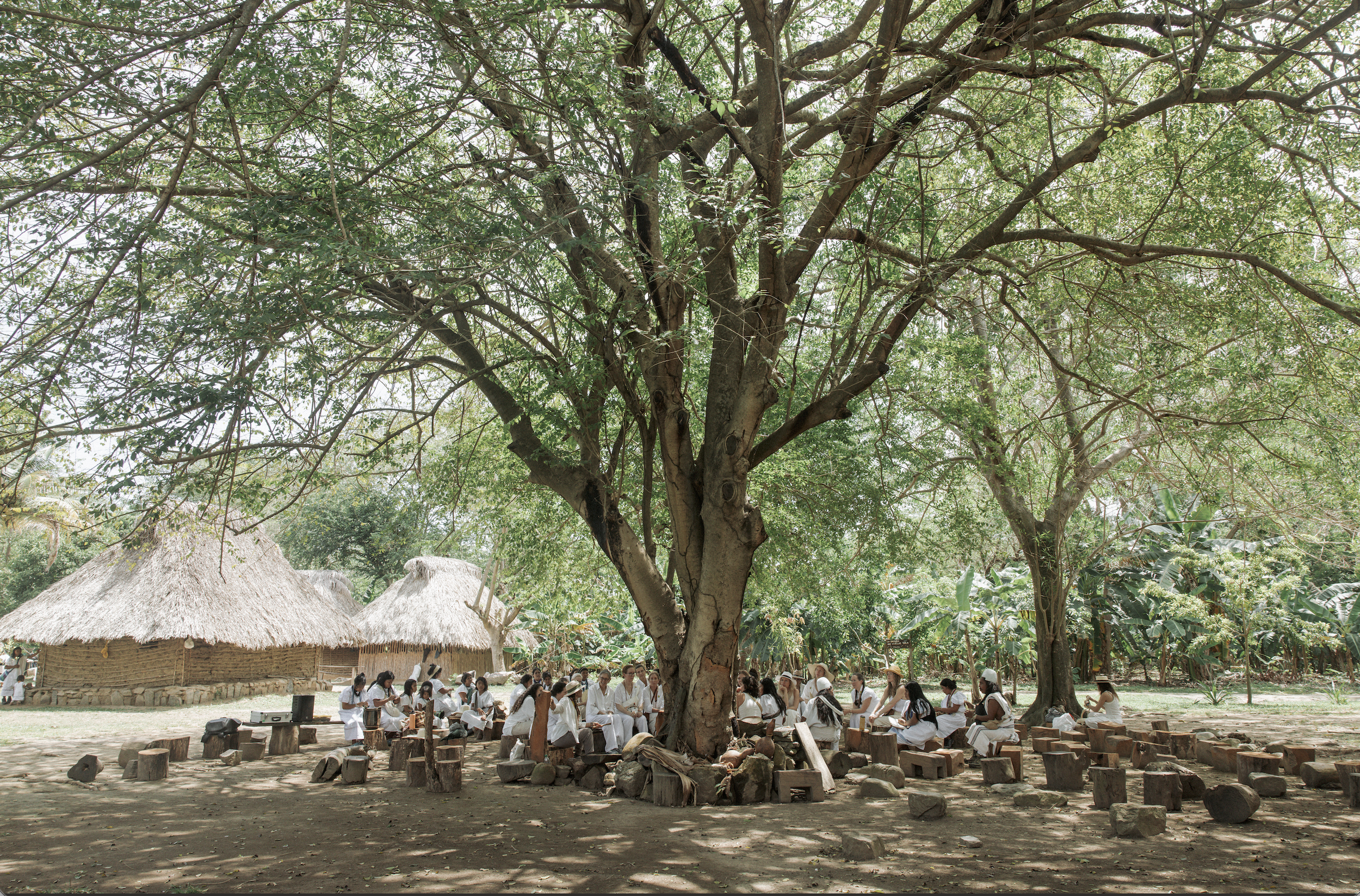
photo credit: Leia Vita Marasovich // @leia_vita
I did return some thirty years ago to that tenant farm that had been my home for a few formative years. The land was barren. The old farmhouse was abandoned for decades. It was profoundly sad on so many levels, but it also reminded me that being a responsible steward of land is not about ownership of the land. It’s about knowing land is life and all our lives depend on it. It’s also about believing the proverb most often attributed to Indigenous leaders: “We don’t inherit the land from our ancestors; we borrow it from our children.”
May your Thanksgiving be a celebration of Mother Earth!
Onward!
Pat

