Over the Valentine’s weekend, I found myself thinking about love — not the sentimental kind, but the courageous, disciplined, world-building kind. The kind rooted in trust, dignity, solidarity, and shared purpose. The kind that organizes, that endures, that transforms systems. That is the kind of love I witnessed at SEWA during my visit last week to the headquarters in Ahmedabad, India— love expressed as economic self-reliance, democratic governance and collective action for the common good.
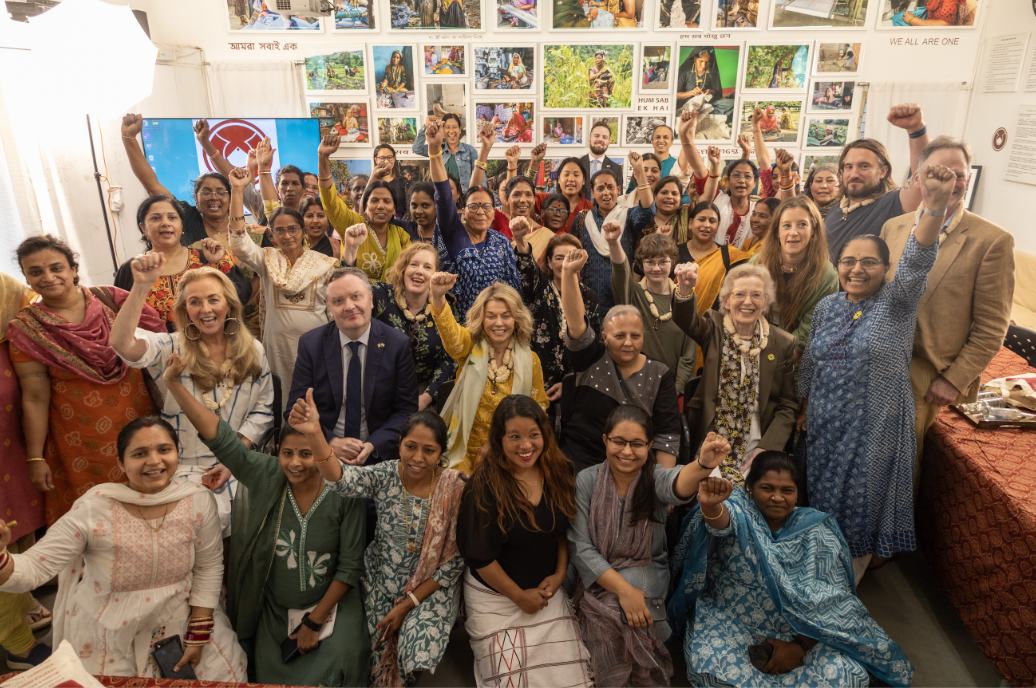
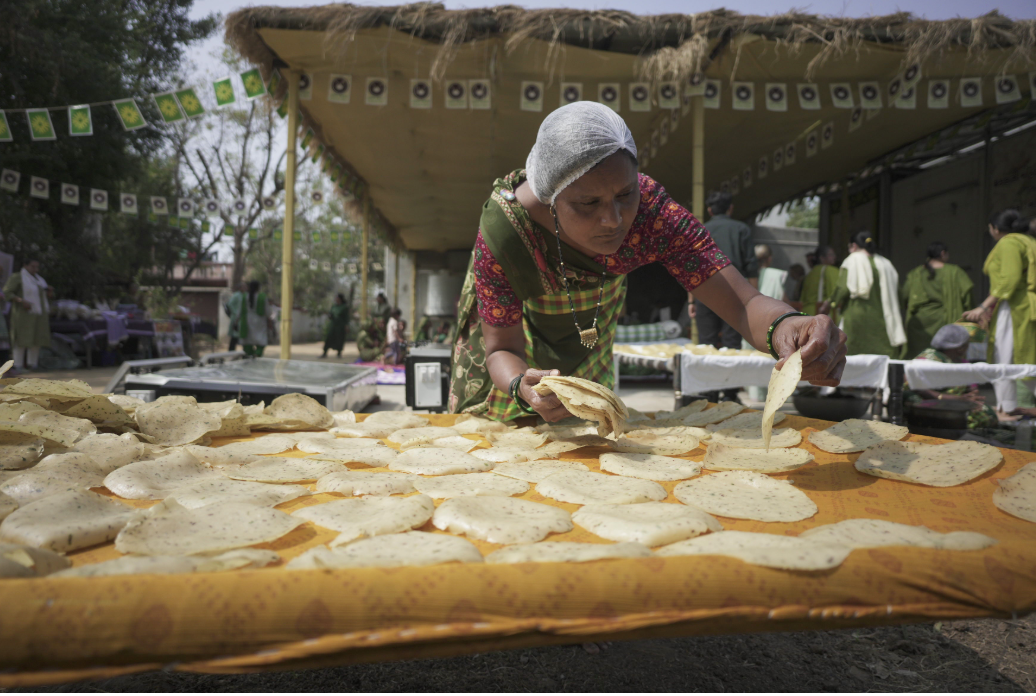
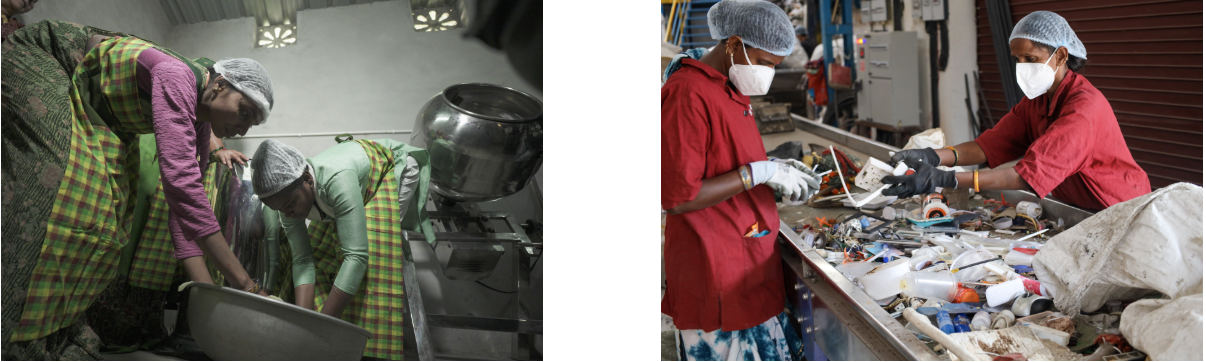
A love letter to the 3.8 million women of SEWA — self-employed workers across India’s informal economy — growing food, selling it as street vendors, recycling urban waste into usable materials, weaving and embroidering centuries-old traditions, installing solar panels, adopting e-transportation, and helping clean the skies of their communities. They are farmers, salt pan workers, waste management technicians, artisans, vendors, solar engineers, and small entrepreneurs. They are self-reliant. They are organized. They are unstoppable and inspiring. Through their membership in SEWA — one of the world’s largest and most successful trade unions — these women demonstrate the collective power of sisterhood, solidarity, and full employment with dignity.
Last week, I had the privilege of meeting many of SEWA’s members and leaders in Ahmedabad, observing their work and listening to their stories of intergenerational transformation. For more than 50 years, SEWA has quietly been building an economic model that works — not as charity, but as collective power.
Founded in 1972 by Ela Bhatt, SEWA is a union of women working at the margins of the formal economy across 20 states and more than 125 trades. Its membership stands at 3.8 million and is projected to reach 5 million within the next five years, under the current leadership of Reema Nanavaty. It is a member-owned movement. Women pay dues. They elect their leaders. They build institutions together. SEWA operates its own banking system. It runs waste sorting and paper-making facilities. It manages solar initiatives, artisan collectives, food services, and cooperative enterprises. (If you visit Ahmedabad, eating at Kamla is a must!) Every initiative is designed to create sustainable livelihoods and long-term security.
I traveled to SEWA as part of a Project Dandelion delegation led by Mary Robinson, former President of Ireland, co-founder of Project Dandelion, and a longtime friend of Ela Bhatt. Our delegation included Project Dandelion colleagues: Poppy Mason-Watts and Laura Cook, as well as other leaders working at the intersection of faith, finance, and climate innovation.
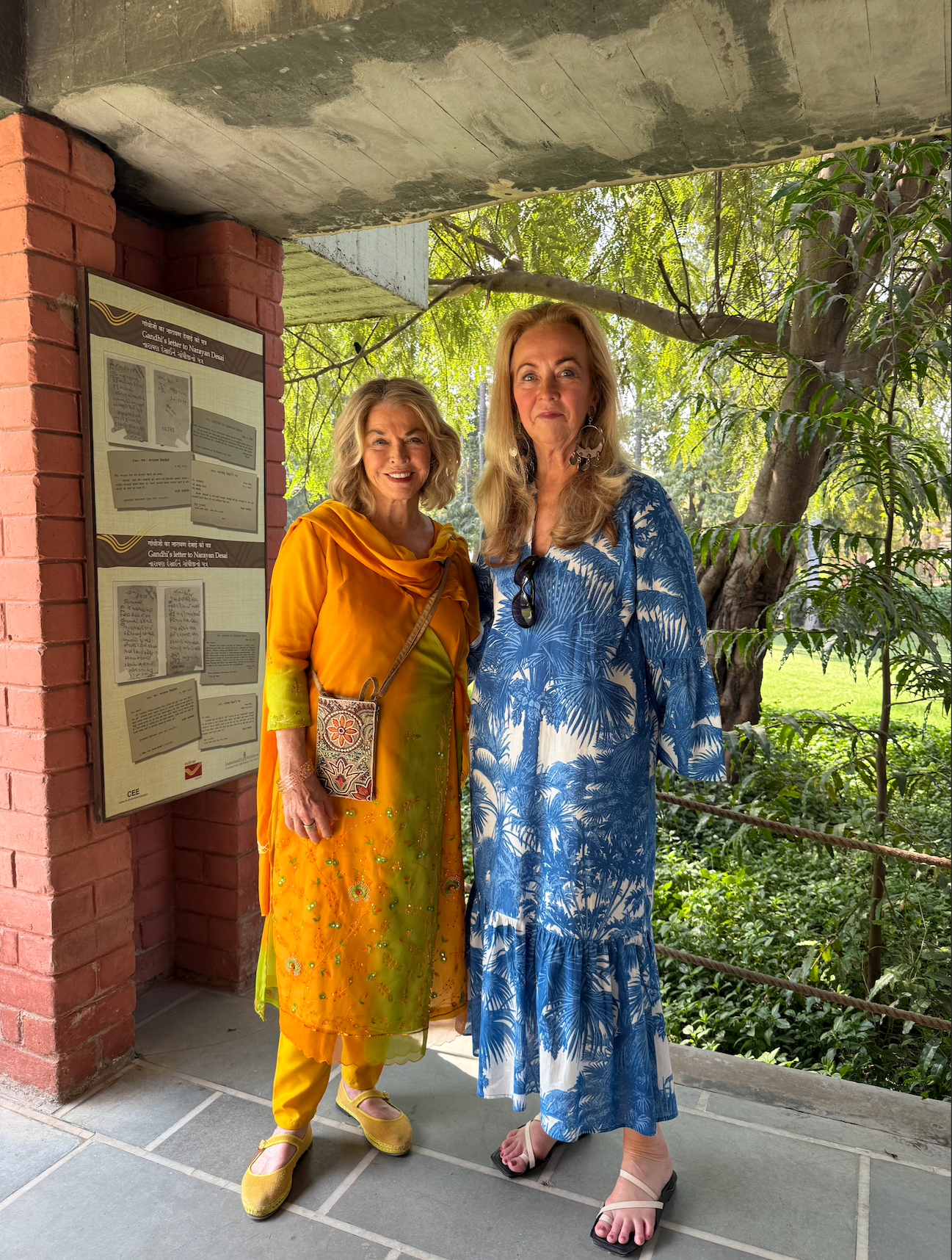
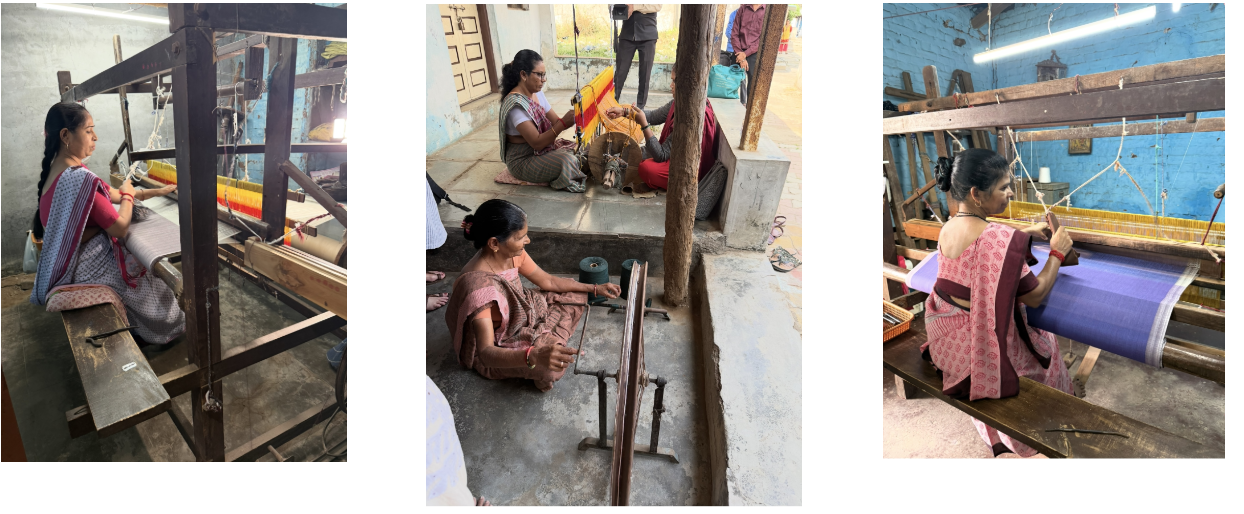
Also traveling with me was my dear friend Susan Walker, founder of IBU, who has built a global marketplace for women’s artisan collectives across more than 40 countries. Together we visited a village of weavers, spent time with SEWA’s talented designers, and toured and shopped at Hansiba, SEWA’s artisan showcase. Susan offered strategic guidance on expanding global markets for the SEWA artisans who are preserving traditions of weaving, embroidery and other textile arts.
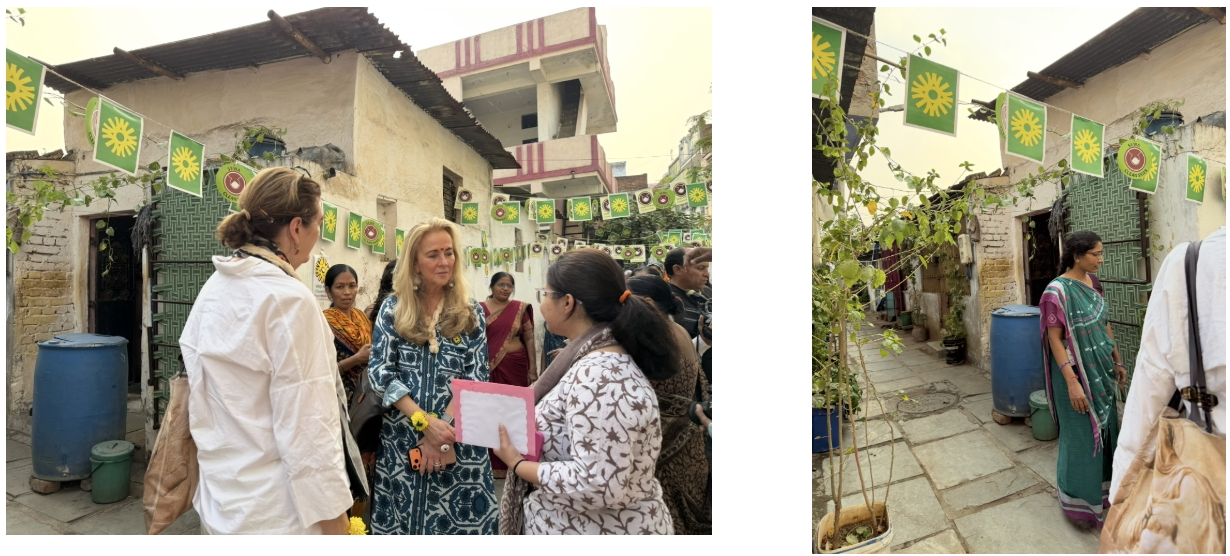
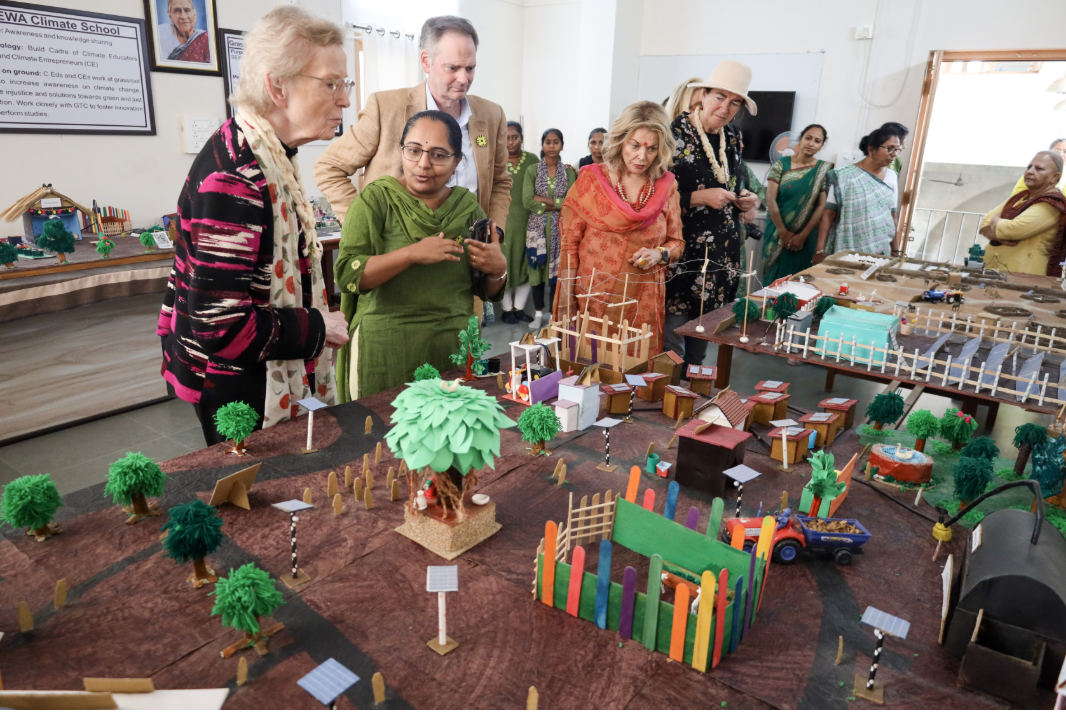
They are building Green Villages beginning with Green Schools that teach environmental stewardship to the next generation. Establishing Green Skilling Centers that train women in renewable technologies. Creating cold storage cooperatives to reduce crop loss. Installing solar fans in dense urban homes. Developing large scale solar farms led by young women engineers. This is climate action rooted in livelihoods. Then there is one of SEWA’s most groundbreaking innovations: world’s first Parametric Heat insurance. As temperatures in India increasingly reach life-threatening levels, outdoor workers such as the salt pan laborers, farmers, waste workers, face impossible choices between income and survival. SEWA pioneered one of the world’s first heat insurance programs, allowing women to forgo work and receive compensation when temperatures exceed dangerous thresholds. It is a simple idea that is life-saving and importantly, replicable.
During our visit, an African delegation from Ethiopia and Tanzania was studying SEWA’s cooperatives and climate innovations to adapt them for their own communities. Project Dandelion is exploring ways to deepen and expand on similar Global South exchanges. But perhaps the most profound lesson of SEWA is not technological. It is philosophical. SEWA’s democracy is grounded in Gandhian principles: Satya (truth), Ahimsa (non-violence), Sarvadharma (respect for all faiths), and Khadi (self-reliance through dignified work), inspired by Mahatma Gandhi.
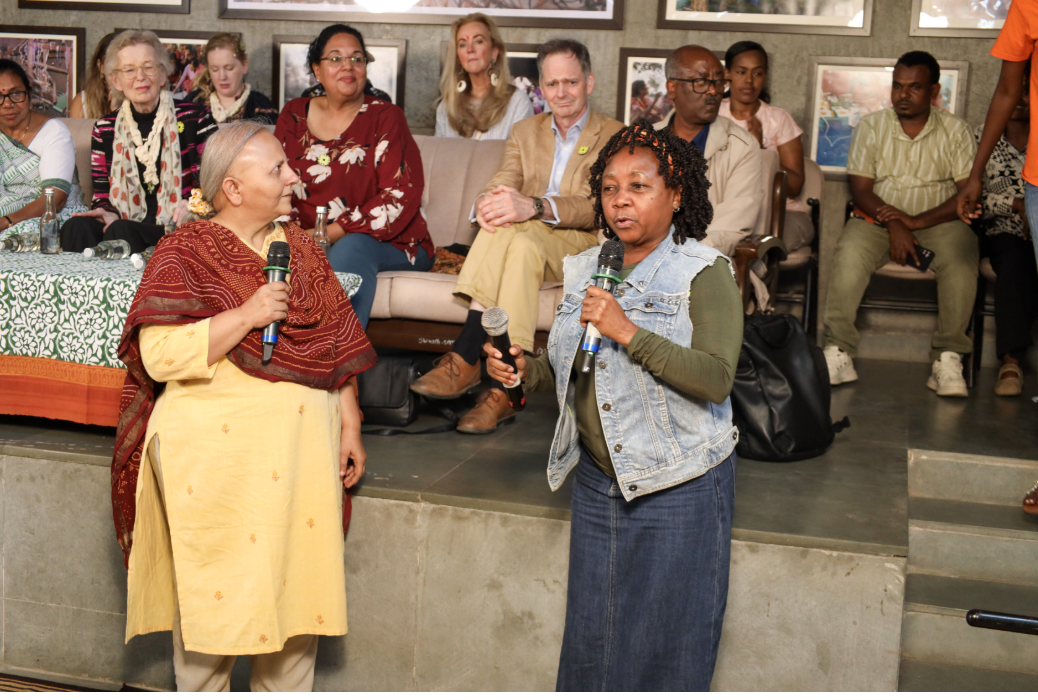
Trust is foundational. Trust is between the members and trust in elected leadership. Trust that is built slowly over decades with positive outcomes.
I heard story after story of transformation that is possible when trust deepens through opportunities to pursue a better life.
From one: “My mother was a garment worker, unable to leave her home, barely surviving. Now she is fully employed in a SEWA collective. All her children went to college. Some are lawyers. Some are doctors. I am an elected SEWA regional leader.”
This is not an isolated story. It is happening across India. SEWA proves that poverty alleviation, climate resilience, cultural preservation, and women’s leadership are not separate agendas. They are inseparable.
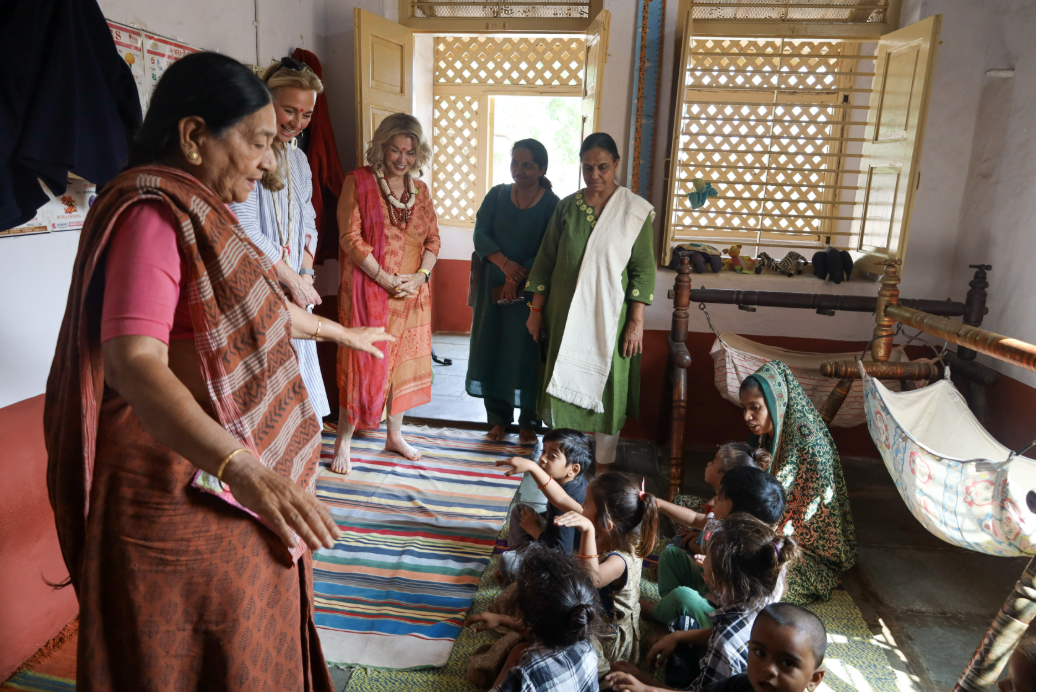
Imagine if trust were the foundation of our economies. Imagine if full employment did not exploit people or the planet. Imagine if sisterhood and solidarity guided policy decisions. That is not idealism. It is already happening at SEWA. They call it - Building an Economy of Nurturance" - a concept pioneered by Ela Bhatt. I offer this love letter to SEWA’s members and leaders with admiration and gratitude for all they are building, modeling, and sharing with the world. And I am reminded of Gandhi's words:
“What barrier is there that love cannot break?”
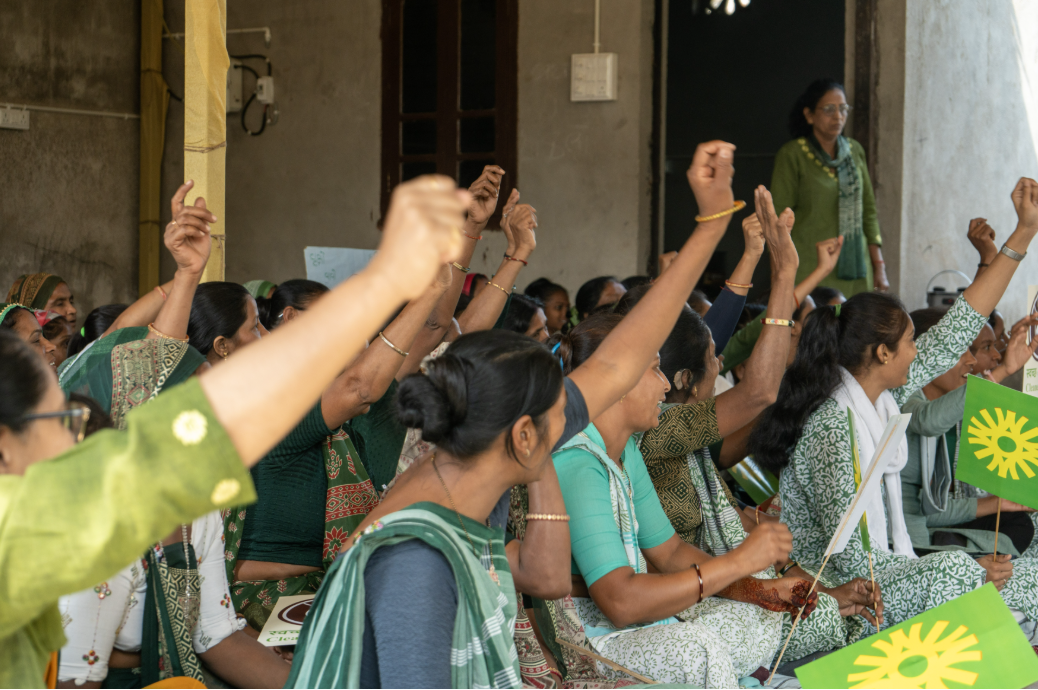
Onward!
Pat
P.S. Forwarded this newsletter and find it informative? Subscribe here.
P.P.S. If you enjoy this newsletter, consider sharing it with friends and family!

