You have most likely read or heard a lot about Ted Turner this week as friends, colleagues and admirers from around the world share reflections on his extraordinary life. Few individuals accomplished so much or had more impact, quite literally, on the whole world.
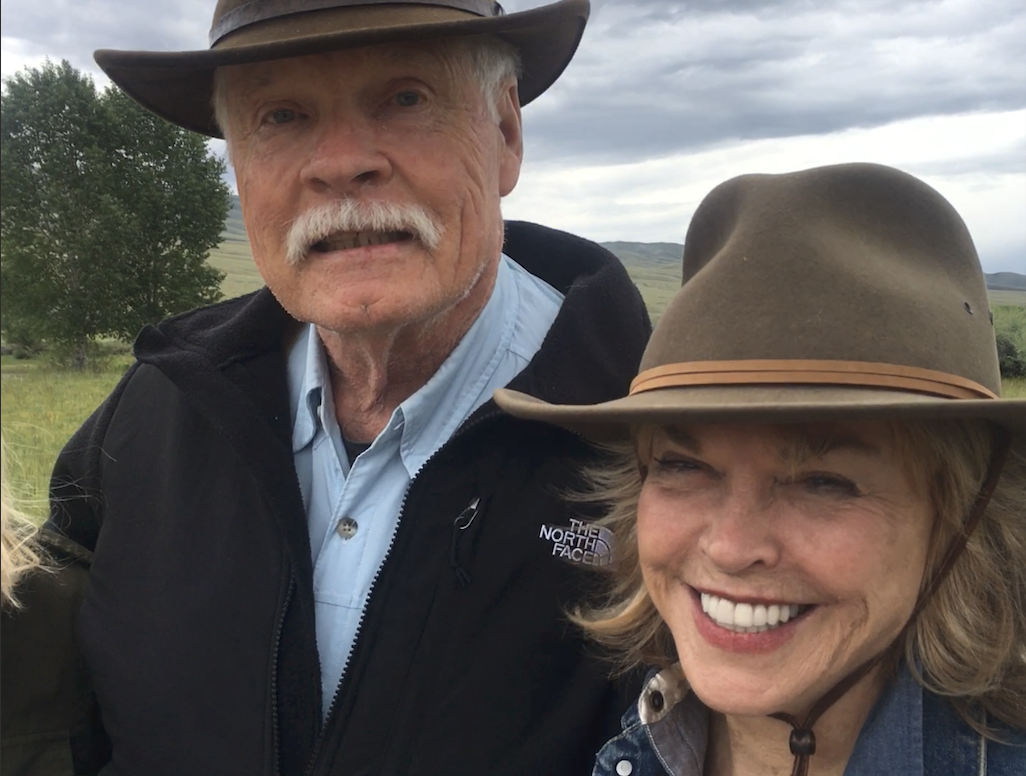
Much of the Ted story has been told--and hopefully will continue to be told and celebrated. My reflections are more personal. He was once my boss, my mentor and advocate, and we became family when our son, Rutherford, married his daughter, Laura. For the past three decades, we have also shared the joys of being co-grandparents and co-great grandparents!
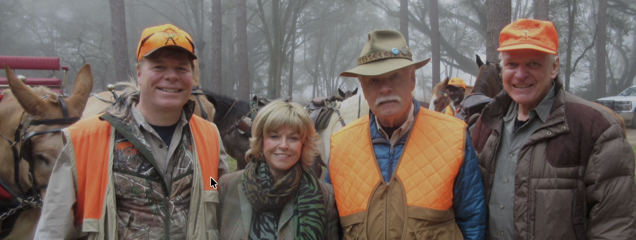
(L-R) Rutherford, myself, Ted, and my husband, Scott
Like many of the most important moments in a life, meeting Ted Turner was one in my life that almost didn’t happen. I was struggling as an independent filmmaker, determined to elevate the stories of women at a time when the so called 'mainstream media’ considered such programming to be unimportant and unpopular. (One of the reasons why I had left a good position at NBC). Along with my production partners, Jacoba Atlas and Diana Meehan, I had tried, with no success, to interest every cable and broadcast network in a documentary series on women in American history to be narrated by Jane Fonda, whom I had met doing a story for NBC on the Jane Fonda Workout. Before giving up, Jane suggested pitching the project to her husband, Ted Turner, for one of his cable networks. “But would he be interested in the history of women?” I asked skeptically, to which Jane replied, “He married me!”
I requested a meeting and within a few days was in Atlanta, walking a bit wide-eyed, past the Gone with the Wind posters lining the 14th floor of the CNN Center, to be greeted by Ted whose first words to me were “you’re late!” Somewhat flustered, I pointed out that it was just 8 am, the time scheduled for our meeting, to which he responded “5 minutes before is ‘on time!’
That was the first of many lifetime lessons from Ted.
I had barely sat down, taking in quickly the awards on every surface and the big plaque on his desk – “Lead, Follow, or Get out of my way“ – when Ted began pacing and firing questions, ignoring my attempts to give him the carefully prepared proposal. What I was not prepared for was how much Ted knew about the women in America’s history! As I observed that day and came to appreciate fully, Ted was a lifetime student of history and believed in the power of knowing the past in order to shape a better world in the future.
After our first 15 minute meeting, my future was clearly going to be different and better than I could have planned or imagined! Ted had agreed to fund a 6 hour documentary series which Jane would narrate called “A Century of Women” and I also had a new job! In the flurry of questions and the excitement of realizing we had the funding for the series, I had almost missed the offer (or what felt more like a ‘command’) to move to Atlanta and lead Turner Original Productions.
The next 10 years were the best any filmmaker, producer, media executive could hope for. I had a boss who cared more about the impact of the work than ratings or revenue. I learned how to pitch an idea in 3 minutes or less because that was how long I usually got to get an answer from Ted who greenlit (or not) every project. I also learned early on that when he gave editing notes, which he did often, as he reviewed every film before broadcast, he was right. Not just because he was the boss, but because he expected every program to optimize the power of media to inform and inspire as well as entertain.
We produced hundreds of hours of natural history, wildlife, environmental issue documentaries even when they didn’t get big audiences or lost sponsors afraid of controversy. We co-funded the National Geographic Explorer series, co-produced David Attenborough series with the BBC, financed Jacques Cousteau’s ocean research and voyages and so much more! More than 100 hours a year of documentary films!
Ted often joked that we, the documentary unit that got renamed as CNN productions, were the ‘nonprofit unit’ in a ‘for-profit’ company. It’s a fact that many of our most important films attracted few sponsors, but Ted never compromised the content for commercial benefit. It was the job of my dreams– working for someone who believed stories, well told, could shape opinions, open minds, shift culture and even change laws and lives. I was incredibly privileged to be a part of it all with Ted at the helm, making history while also documenting or reporting it.
When the US boycotted the Olympics in 1980, Ted, passionate about sports as an important pathway to better international relations, created an alternative international world sports competition, the Goodwill Games, and in 1994, he decided the Games would be held in the former Soviet Union.
I arrived in St. Petersburg from my overnight flight to find a note in my hotel room which instructed me to go directly to the restaurant to meet Ted. Without so much as a welcome, he slammed his cup of coffee on the table and asked, “Pat, what about the Cold War?” The Berlin wall had come down in 1989 and I responded: “It is over, isn’t it?”
“Of course it’s over,” he answered in his best booming voice, and went on to express his concern that future generations would not remember the longest war in history or what it was like to live on the brink of nuclear annihilation as both East and West had built up nuclear weapons for what was often referred to as the MAD strategy: “Mutually Assured Destruction”. (Ted later funded a global nuclear threat initiative (NTI) to address the dangers of nuclear weapons and to advocate for the end of the arms race.)
That morning in the former Soviet Union, Ted was focused on documenting the whole story of the Cold War which he worried would become a footnote in our grandchildren’s history lessons, and that is what has happened. And once again, as he had done often during our time of working together, Ted was focused on the responsibility of media to report the facts and tell the whole story, and it was my responsibility and privilege to implement his vision. As he always instructed at the end of such meetings– “get it right!” And in this case, what Ted believed would be right was a 40 hour documentary series, one hour for each year of the Cold War.
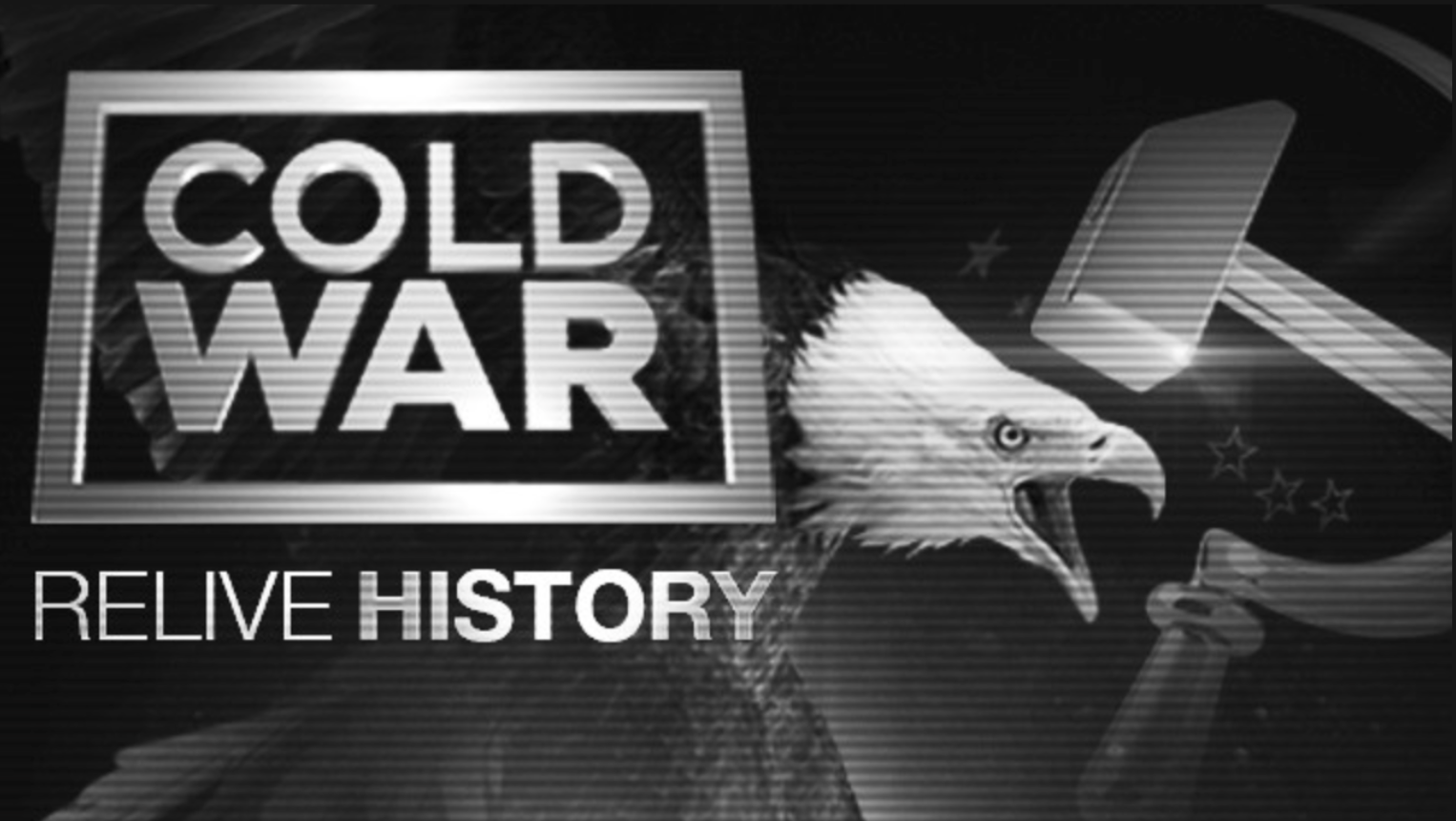
I didn’t protest the 40 hours at the time, but other executives at the company cautioned about the cost, and the time commitment. I just got started on what would be a four-year journey bringing together historians from every region in the world and hiring an award winning production team headed by Sir Jeremy Isaacs. For background, we interviewed more than 600 world leaders including Helmut Schmidt, Margaret Thatcher, Andrei Gromyko, Robert McNamara, Fidel Castro, George Bush, Henry Kissinger, Mikhail Gorbachev, among others. When we presented Ted with the production proposal for a 20 hour, not 40 hour series, he called me at 6 am the very next morning to say he had read the materials and we had not gotten it right about four other important aspects of the history. Ted knew enough of the history to challenge the historians and he was right, once again. With his direction, we did the additional research and interviews and Cold War became a 24 hour series, broadcast on CNN in 1998 and received many awards, including the Peabody Award for Excellence. One of the longest documentary series ever, it is still widely considered to be the definitive story of a history that we are perilously close to repeating again.
(Unfortunately, Cold War is not available to stream online. Note to CNN: A rebroadcast would be a public service at this time.)
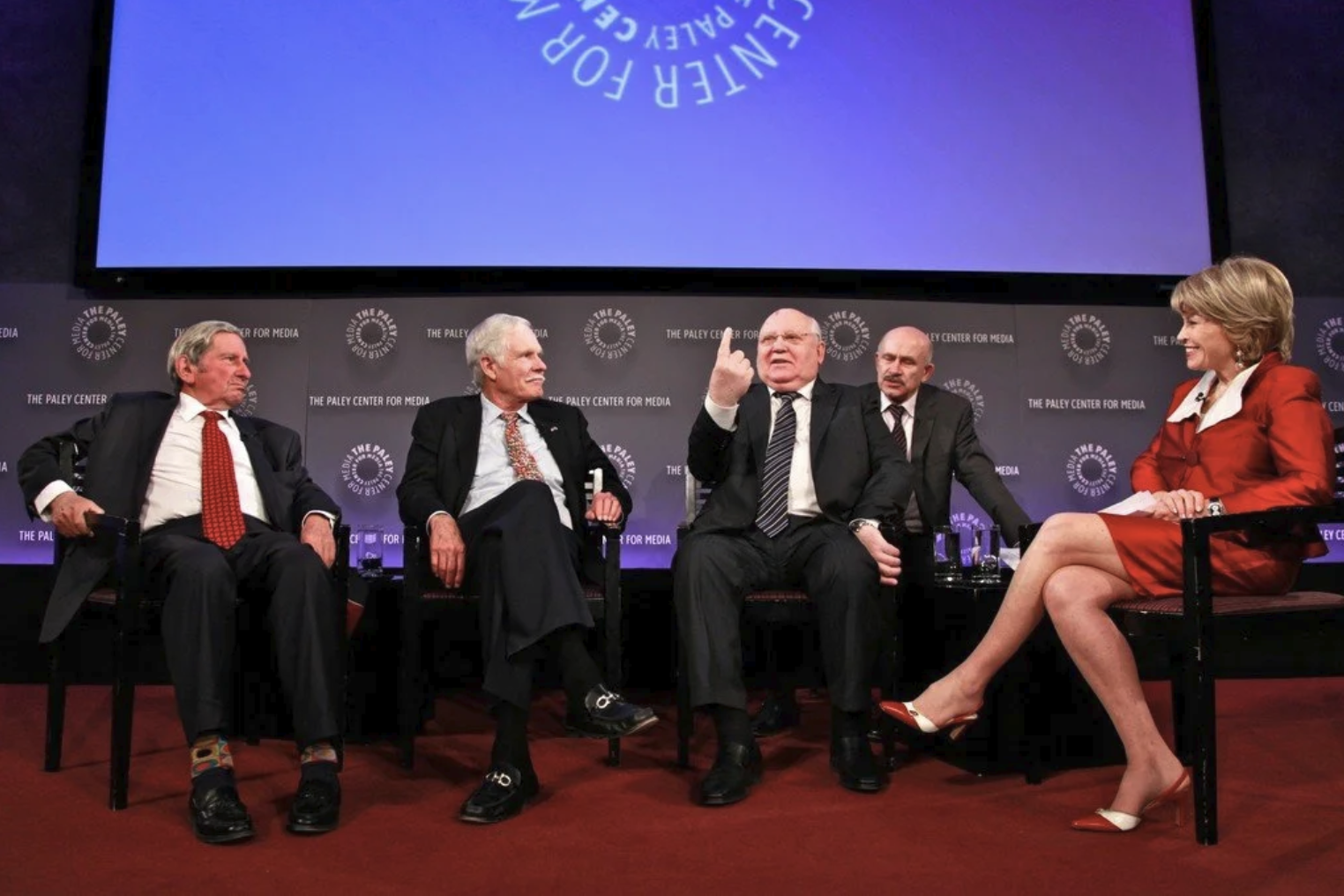
(L-R) Executive producer Sir Jeremy Isaacs, CNN Founder Ted Turner, The Honorable President Mikhail Gorbachev and The Paley Center for Media President & CEO Pat Mitchell attend a screening and panel on Cold War: The Complete Series at The Paley Center for Media on April 29, 2012 in New York City. (Source: Charles Eshelman/Getty Images North America)
Another experience from those rewarding and privileged days of working with someone who had a clear and compelling mandate for stories that mattered was the Native American initiative that Ted launched in 1992. This was a multi-channel presentation of films, documentaries and books, with all the stories told by the people who lived them! Ted’s big idea this time was to only hire Native American directors, writers, historians and interviewees, and also to invite Robert Redford to get involved, as Redford was a long time champion and advocate for Native stories and was offering mentoring and support for Indigenous storytellers at a Sundance Institute lab, a program that continues to this day.
I had never met Redford but who didn't want to? I requested a meeting, flew to Sundance, Utah and over lunch, convinced him to co-executive produce the six hour documentary series telling the history of 500 nations called “The Native Americans”. Turner and Redford- legends themselves, were both committed to creating opportunities for other stories and storytellers, and both deeply committed to conserving and protecting the planet.
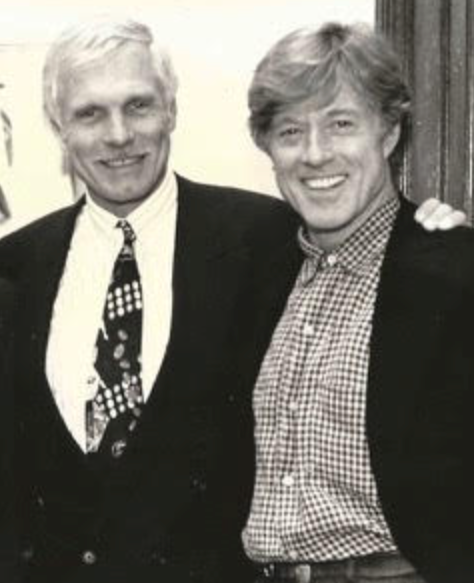
Along with meeting world leaders, working with legends, getting to document relevant history, our documentary films also received 34 Emmy’s, 5 Peabody’s, and an Oscar nomination for the Hank Aaron documentary, "Chasing Dreams". There are enough stories to fill a book…and I did write about some of them in my memoir.
When I went to Ted’s office in 2019 to read the chapter I had written about him, he listened quietly, and when I finished, with that characteristic, disarming smile, reached across the desk, took my hand and said, “I'm so glad we met!” Then he asked that we sing. Ted always liked to sing as a way to end our meetings or dinners. And on this day, we sang one of his favorites…'Somewhere over the Rainbow’. I cried tears of gratitude then and now, remembering this extraordinary man and his impact on my life, on the lives of hundreds of millions around the world, and on mother earth.
Today, I am imagining him somewhere possibly rearranging the rainbows and broadening the horizons as he did during his time among us, and may we honor his legacy by continuing to protect this beautiful and bountiful planet, by standing up and speaking out for what’s right, and to continue to tell the stories that matter.
Thank you Ted.
Onward!
Pat
P.S. Forwarded this newsletter and find it informative? Subscribe here.
P.P.S. If you enjoy this newsletter, consider sharing it with friends and family!

