There are places in the world that invite us to show up differently. Not with our expertise or answers, but with an open heart and willingness to move beyond what we know or even believe.
The Sierra Nevada de Santa Marta is one of those places. Known by its Indigenous guardians as the “Heart of the World,” the place where two great bodies of water meet, where the land between the water and the mountains holds both extraordinary ecological richness and is also home to four Indigenous communities: Arhuaco, Kogi, Wiwa, and Kankuamo.
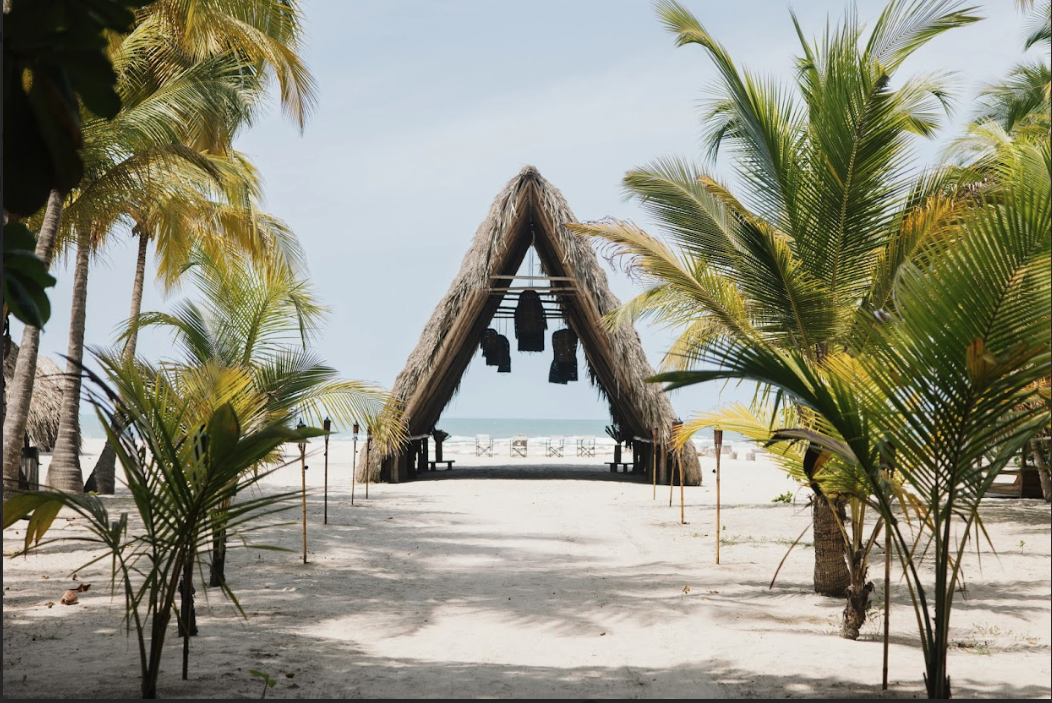
Walking across the small bridge from the familiar world to the welcome at Gitana Del Mar, an eco-retreat center quite intentionally woven into its surroundings, under the stewardship of its owner, Nina Arias, the place, itself, felt like an portal to a new level of understanding about how we inhabit a place matters as much as why we come together within it.
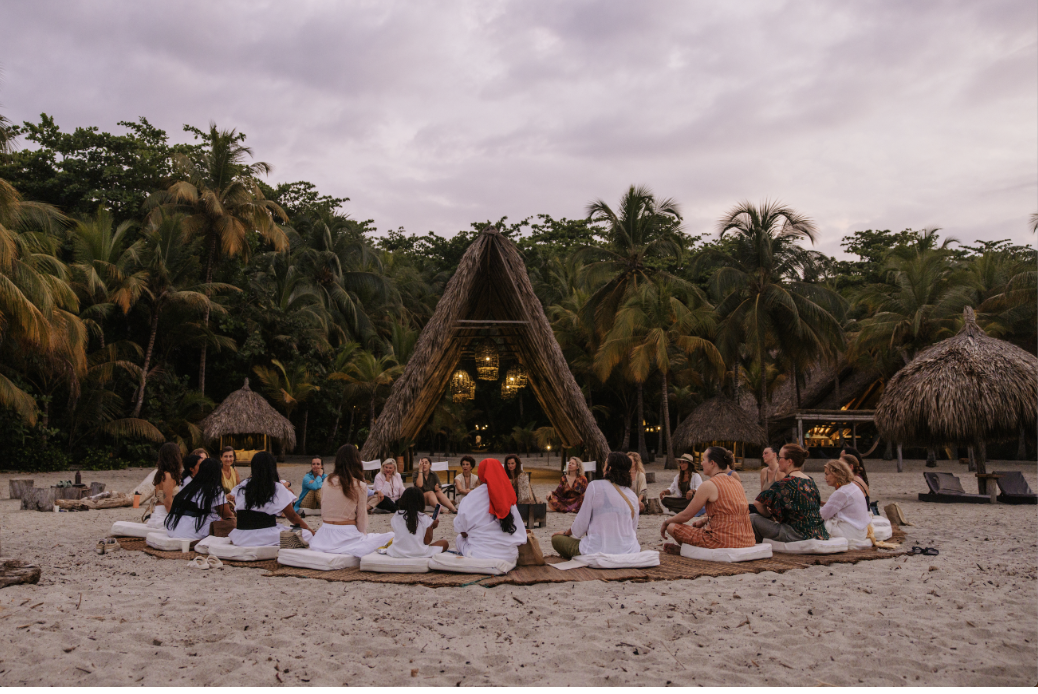
Our ‘why’ was an invitation for an immersive experience and learning exchange to be led by women from the indigenous communities who have been the caretakers of this “Heart of the World” for generations.
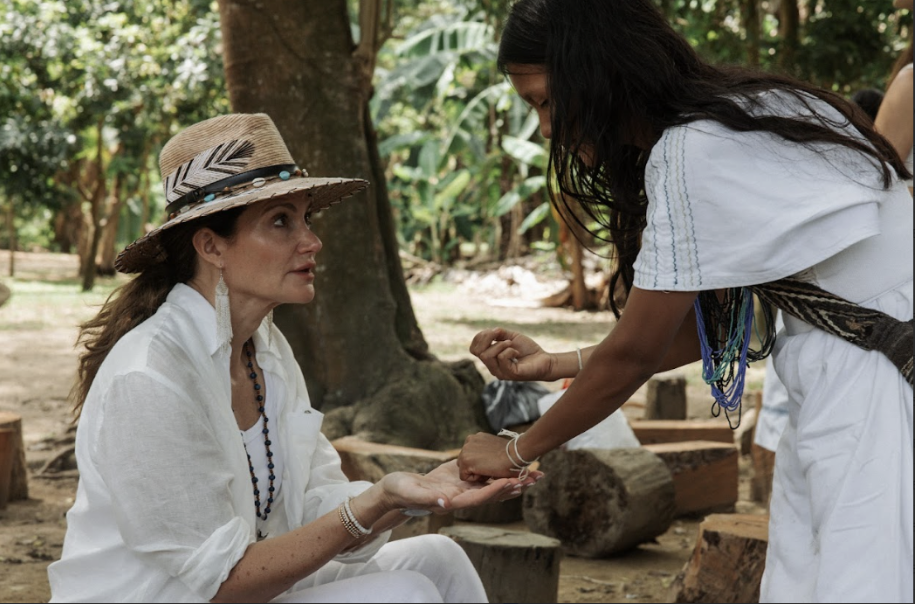
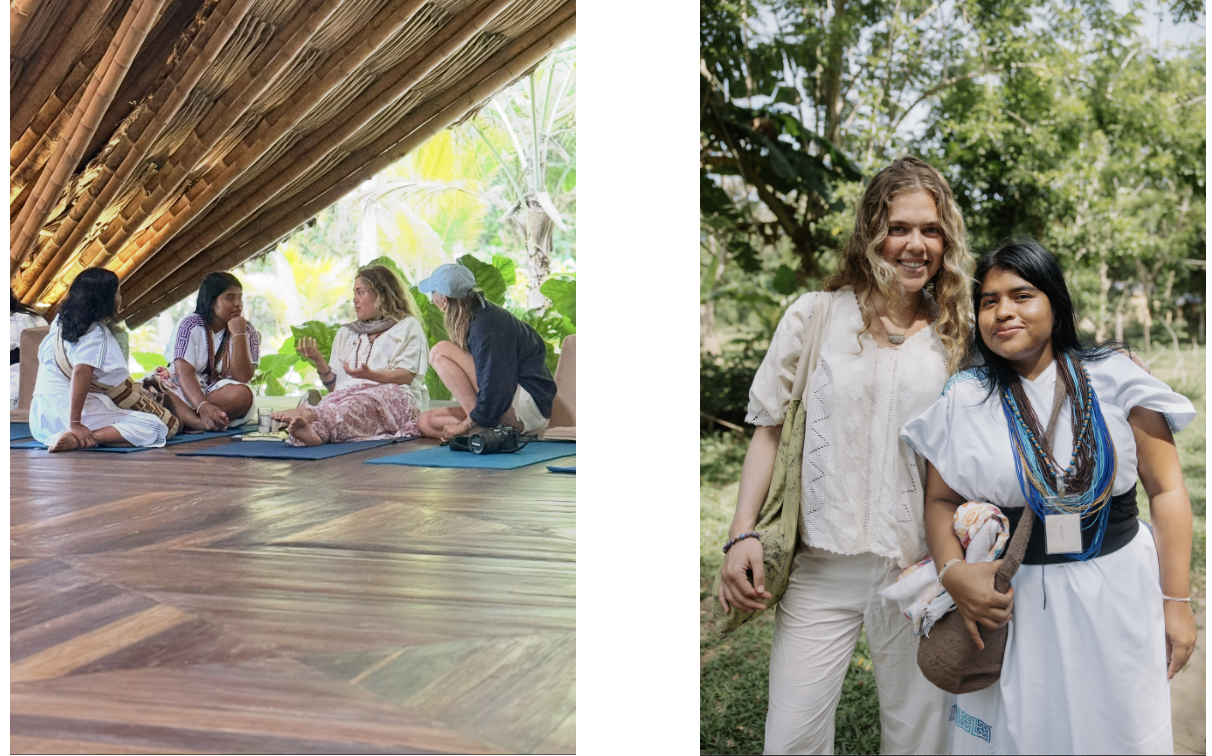
The “how” of the experience revealed itself in small and big differences from the first steps on the sand that warmed our ‘soon to be bare’ feet to the first circle on the private pristine beach where each of the women who had accepted the invitation were prompted to introduce themselves with a ‘weather’ reference. The responses ranged from ‘sunny’ to ‘unpredictable”, and from that circle to all the ones that followed, we experienced a different kind of learning, listening, and leading.
The invitation had emerged from a connection between Project Dandelion and a partnership with UNA Experience Productions, founded and guided by Isabella Noero and Natalia Segovia who already had deep personal relationships with the indigenous women who guided our discussions with a steadiness that came not from an agenda, but from a commitment to share with us, carefully and through translation, literally from Mother Tongue to Spanish to English, their ways of seeing and being in the world.
Unfamiliar. Sometimes nonlinear and challenging to comprehend fully. But we listened. And we felt a different way of learning unfolding, as well as a different perspective on leadership and relationship with community and with Mother Earth which for them is a lived practice, not a theory.
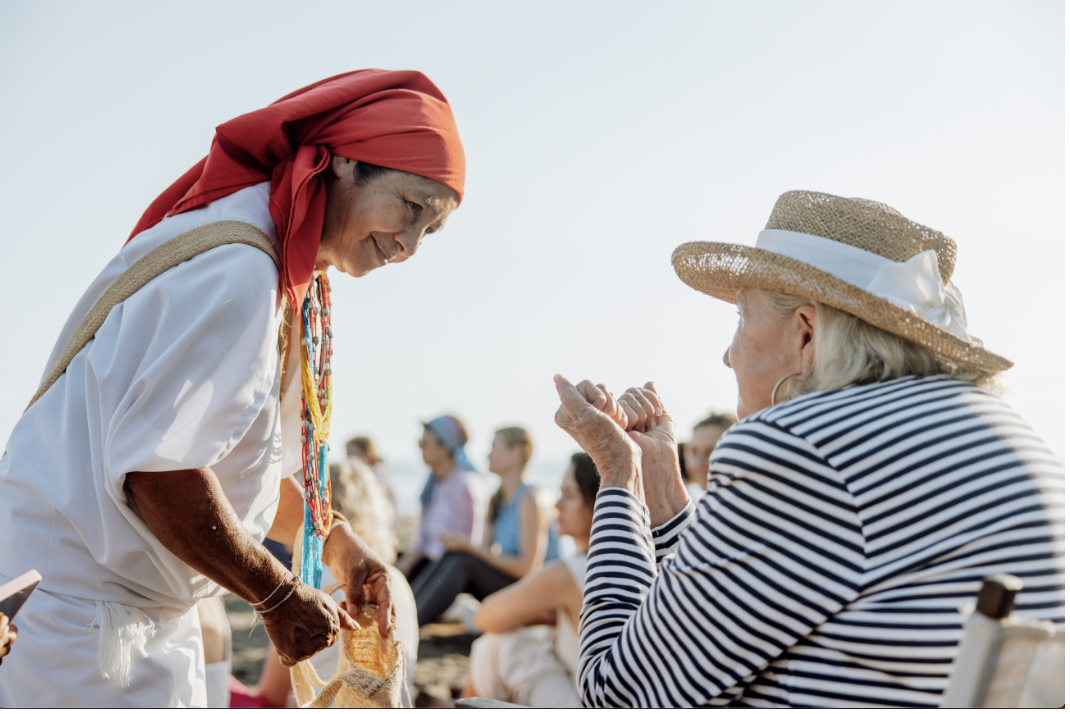
Each of the Indigenous women shared their leadership as practiced inside and outside their communities.
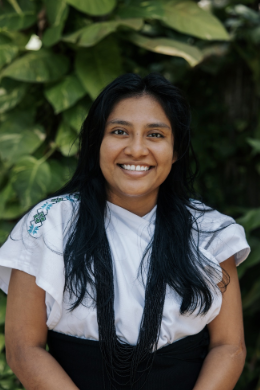
Ati Viviam Villafaña is a global advocate for the conservation of the Sierra Nevada, She is part of a team of representatives from the four indigenous communities of the Sierra, working to secure UNESCO mixed heritage status and supporting the effective protection of indigenous rights.
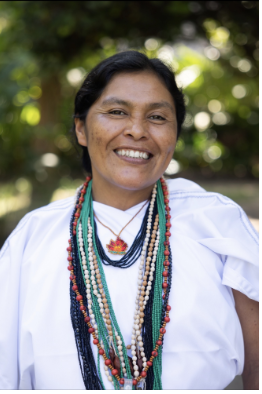
Kundiwe Chaparro
Kundiwe Chaparro works through community action, cultivating gardens in her community and others as spaces where women gather. They come together to grow healthy food and to strengthen the fabric of the community itself.
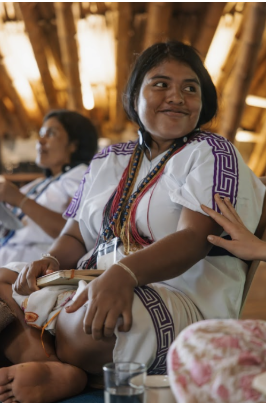
Gunna Chaparro, is a powerful voice for her people and the land they have preserved for generations on global stages. From COP to biodiversity summits, she brings the lived realities of her community into rooms where decisions about the planet’s future are made.
Together, these women and others who came to connect with us also shared unexpected insights; for example, calling us their “Little Sisters” but not in reference to age as they don’t track time on the earth by dates. In fact, some shared that they don’t know their age as it's irrelevant. What they track are the many different ways each has carried forth a responsibility to their communities and all that live on the earth with them, and that is measured across generations, not decades.
(For me, the “elder” in our intergenerational cohort, this felt a welcomed relief from the age and aging obsession of so many western cultures.)
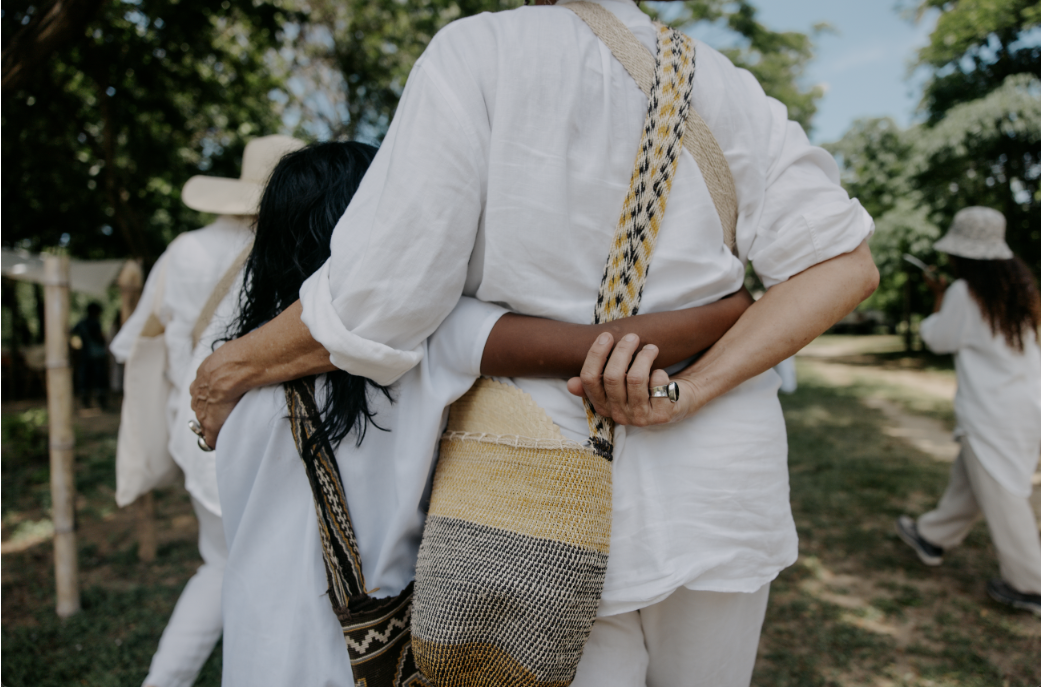
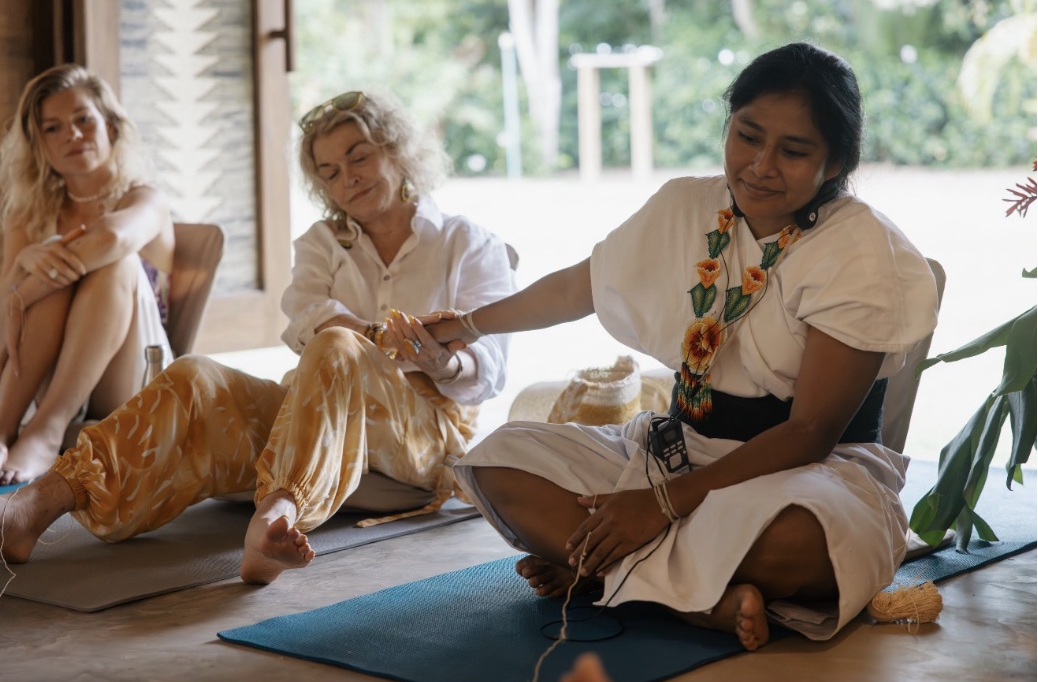
Anyone who has ever traveled to this part of the world most likely recognizes the Mochilla: the woven bags that are carried across the bodies of men, women, and children. Throughout the gathering, the women wove mochillas, their hands in constant, rhythmic motion. They described the weaving as innate as breathing. Every stitch, every row, assembled with prayers and meditations of love and intention for the person who will carry the bag. Their weaving is how knowledge is carried and how stories are remembered. It is how relationships are formed. So as they wove, we did also….but for some of us, not so well. My attempts at weaving a Mochilla fell short of my aspiration but increased my admiration for every one I purchased later to share with friends and family.
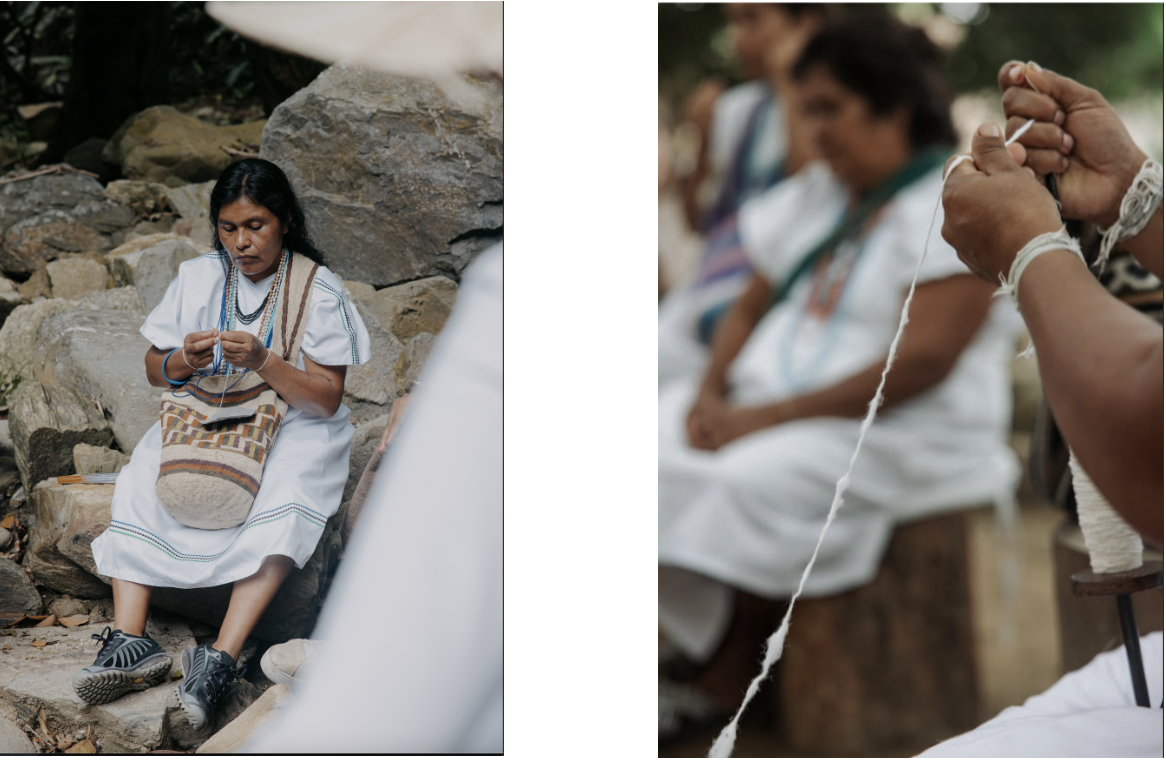
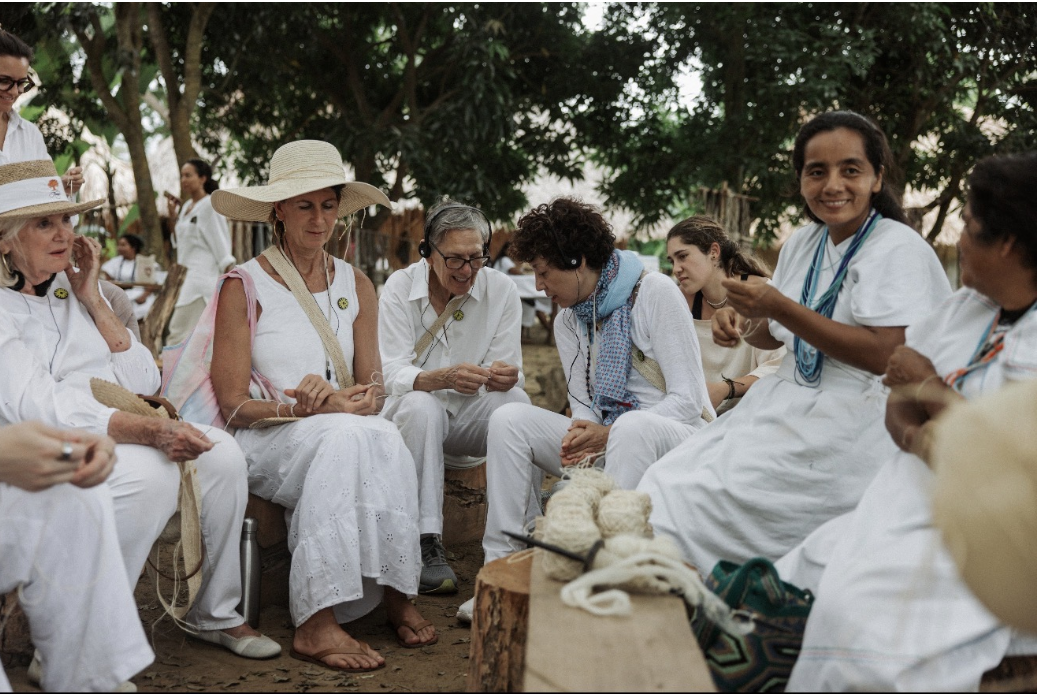
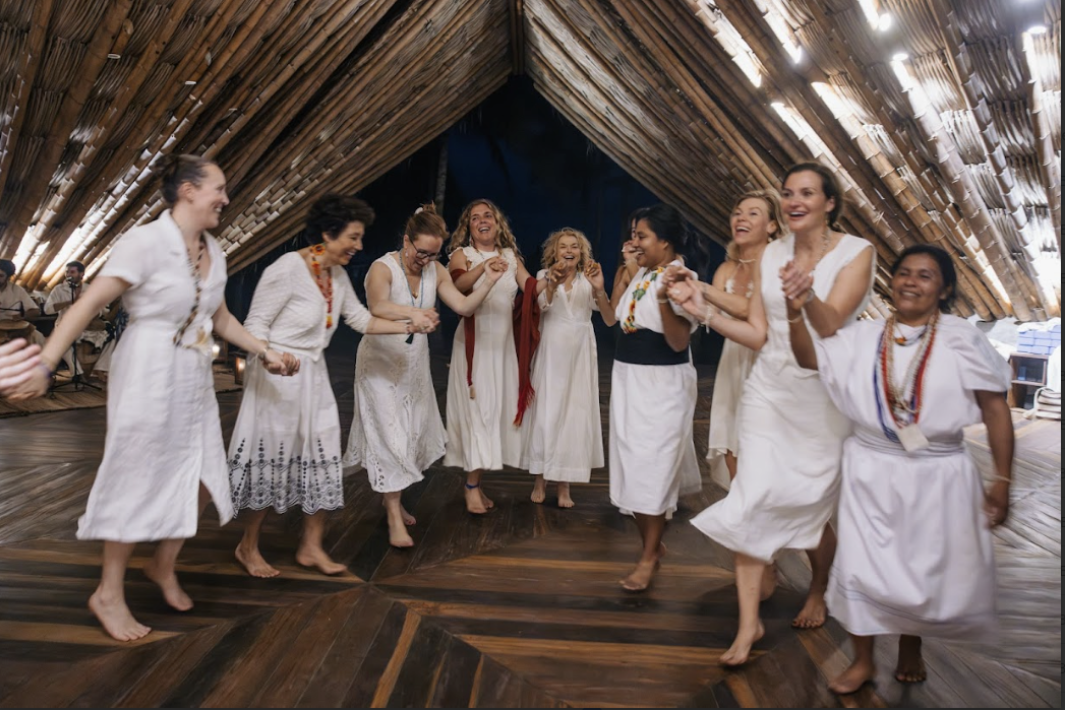
The weaving that truly mattered were the connections among ourselves: women arriving from different geographies and lived experiences. We wove together perspectives, questions, and, at times, our uncertainties and inclination to seek the kind of directional life or work instruction so much a part of strategy convenings. But what was clear by the concluding circle was that we had woven a larger circle, one that included the Indigenous women as partners in an emerging, evolving relationship. As reflections were shared from each participant, the common theme was inclusion as a process: intentional, and earned.
Importantly, the work did not begin or end with the closing circle or the end of the retreat.
In collaboration with the participants and aligned with Project Dandelion’s mission to sustain learning exchanges with these and other Indigenous communities, a commitment was made to support two projects identified by these communities themselves: the construction of new bathrooms and the restoration of a women’s center. We learned in reference to this choice that to restore their women’s space is to restore more than a building. It is to ensure continuity for gatherings, teachings, for cultural practice, and for leadership.
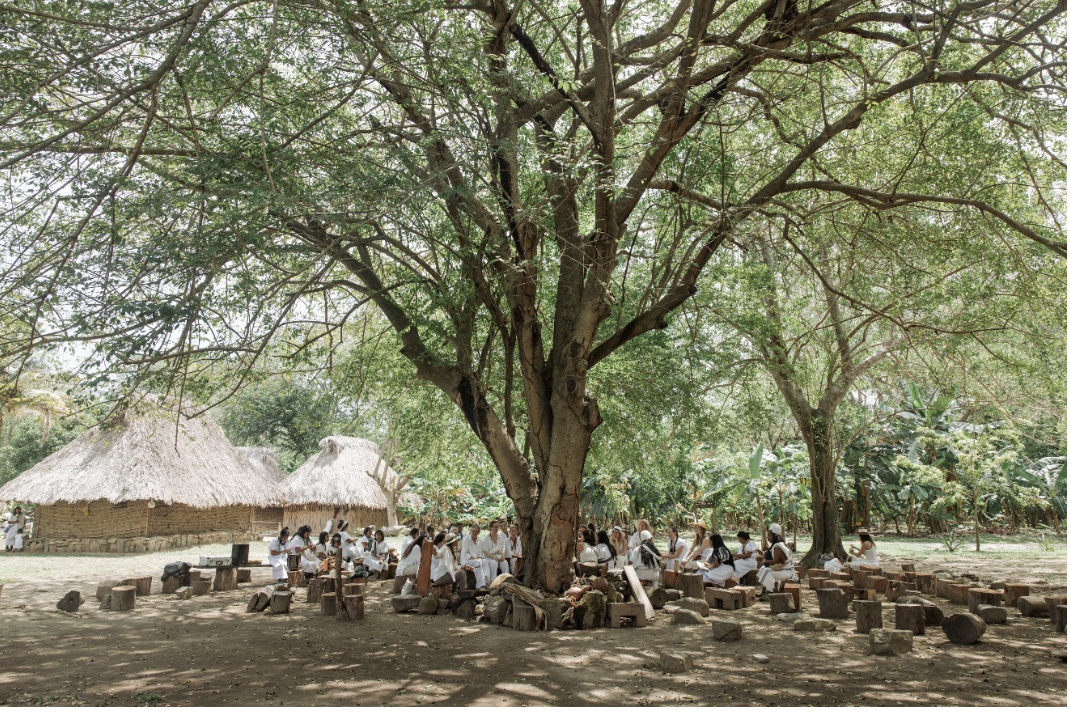
Given that the women who came to this convening at Gitana Del Mar in the Sierra Nevada, the Heart of the World, are, by nature and in their hearts and minds, problem-solvers, we are accustomed to asking: What can we do? The answer we received was both simple and disorienting as it wasn’t so much an answer as it was another invitation.
We were not asked for action and solutions or even support, but for relationship and presence. “First you listen. Then you come to be in community with us.” That was our answer and our invitation
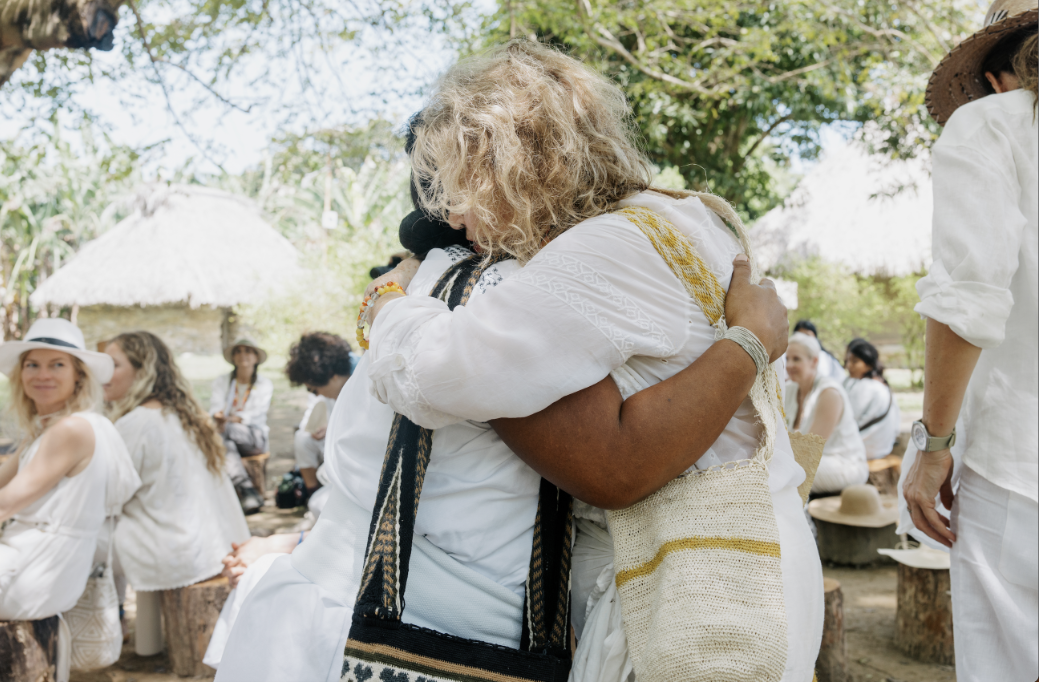
Embedded in that is a discipline many of us have lost: the understanding that trust cannot be accelerated. That meaningful partnership is built through consistency, rather than urgency, even when so many of the problems faced everywhere feel and are, in fact, urgent. But we were being led to understand that showing up, even in the small moments without an agenda, that only then can we begin to ask what is needed. As our hosts say…”First you listen. Then you come to be in community with us.”
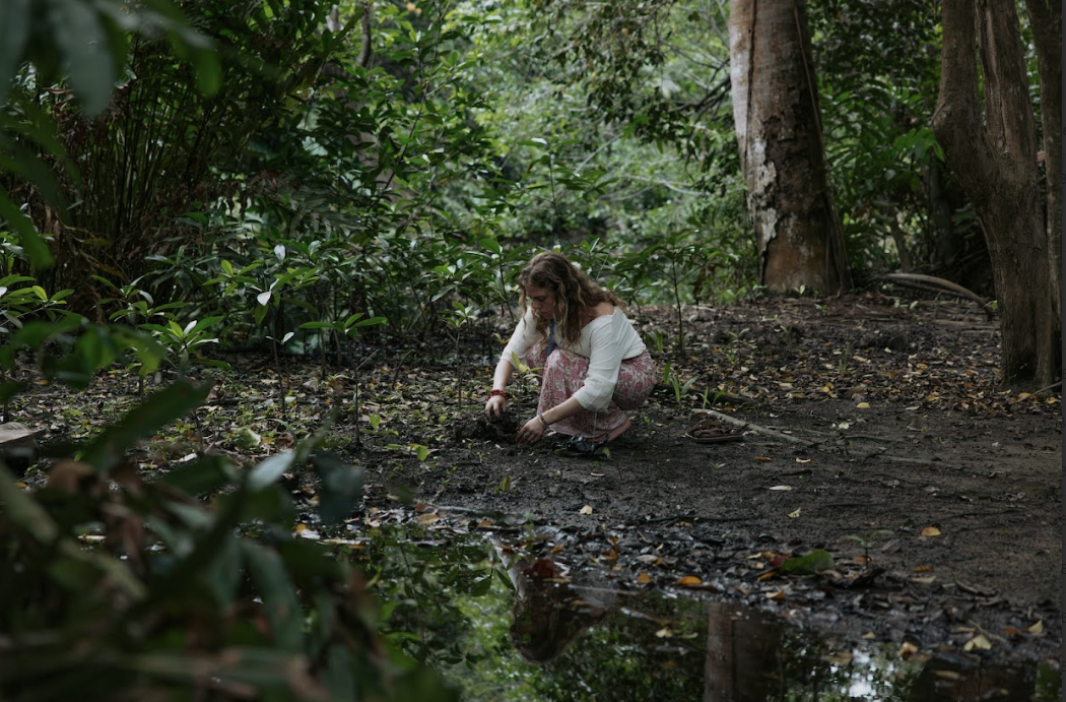
On our final night, Vasser Seydel, my extraordinary granddaughter with whom I was so privileged to share this special learning journey, was invited to plant a mangrove tree as a lasting legacy of a shared commitment to return to our lives and work with new and renewed relationships to each other and to Mother Earth.
This retreat experience did not offer a set of takeaways and a checklist. It offered a shift in orientation. It reminded us that across cultures and contexts, there is a shared human desire: to be seen and heard and to be met with respect for who we are, not who others assume us to be.
It is this that reframes the work, and in the work to address the challenges we face, from climate to community resilience, Indigenous leadership cannot be peripheral, for it is an essential understanding of the relationship between all human beings and all that lives on this beautiful, bountiful planet together. This relationship requires us to rethink partnership between us and the land, water and all of nature’s gifts…not as a transaction or extraction or intervention, but as relationships built on trust. Trust that is founded on shared values and sustained through individual and collective care. Trust that is strengthened when we show up with intention, and trust that is strong enough to hold complexity and difference…and trust that invites us to pursue possibilities, together.
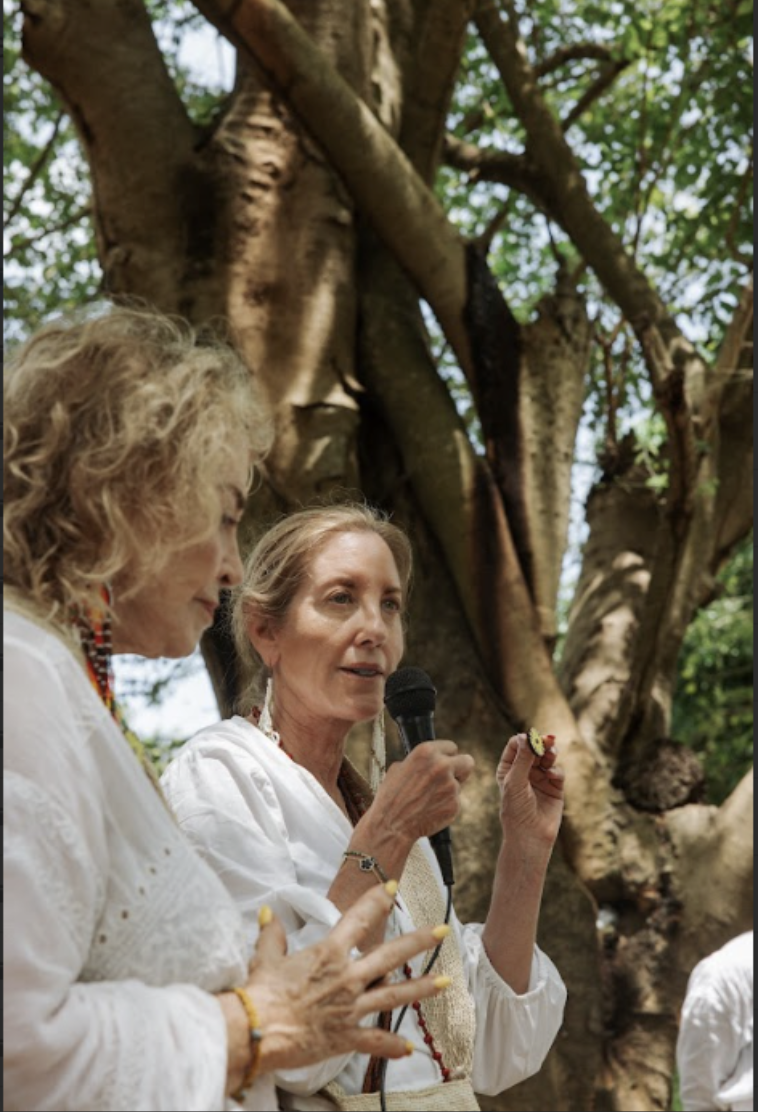
All of the beautiful photos in this newsletter were taken by the very talented, Leia Vita Marasovich // @leia_vita
Onward!
Pat
P.S. Forwarded this newsletter and find it informative? Subscribe here.
P.P.S. If you enjoy this newsletter, consider sharing it with friends and family!

